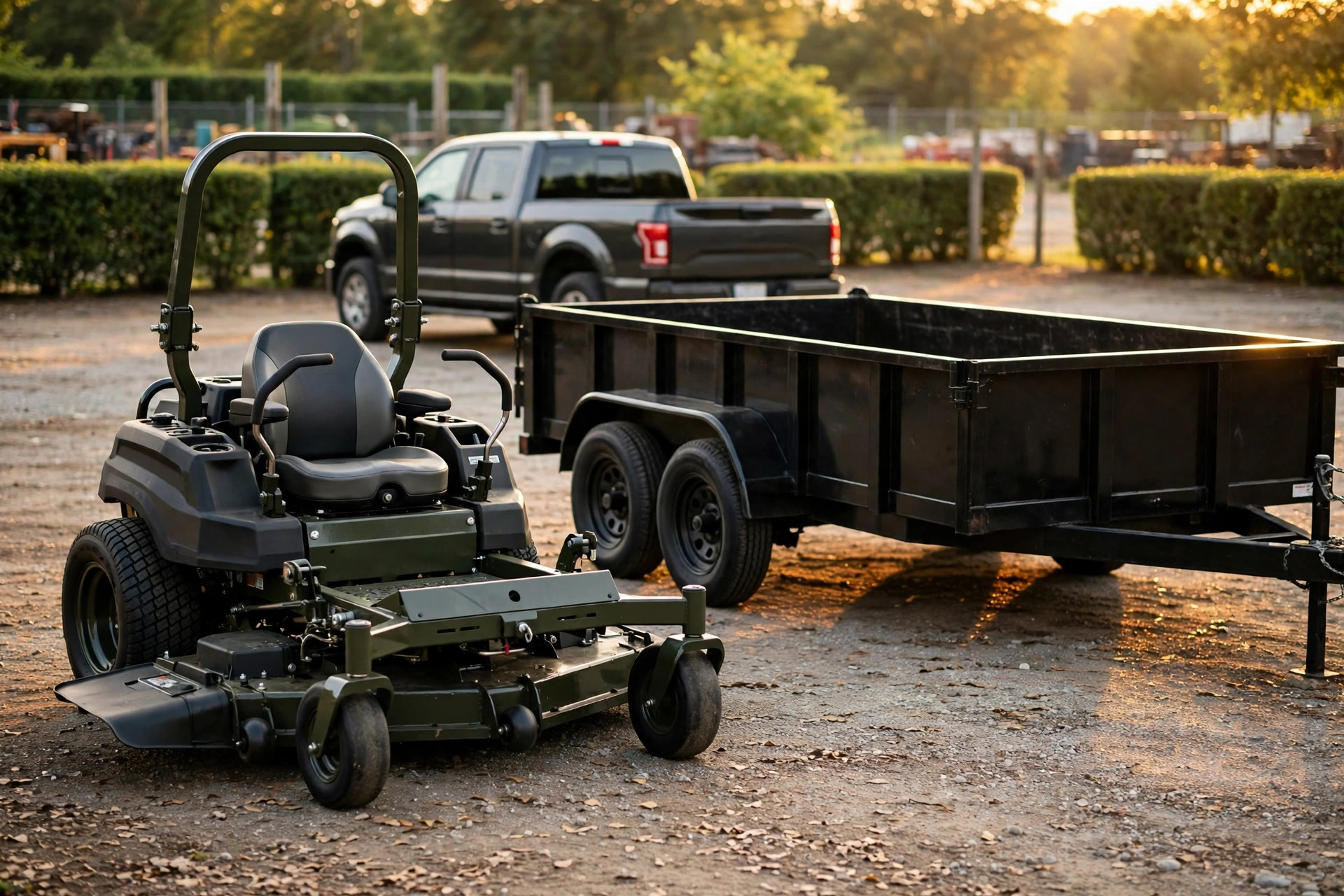
"How does equipment financing work for landscaping businesses like mine that need new mowers and a dump trailer?" — that question lands in our inbox every spring, and it is a good one, because equipment financing is the single best-matched funding product most landscapers will ever use. The machine secures the loan, the terms match the machine's working life, and the approval process is built around equipment, not your credit score.
This guide walks through how it actually works for a landscaping operation — what qualifies, loan vs. lease, new vs. used, seasonal payments, and the mistakes that turn a smart equipment buy into a cash-flow problem.
What equipment financing actually is
Equipment financing is a loan (or lease) secured by the equipment itself. The lender advances most of the purchase price, you make fixed payments over the term, and the machine is the collateral — if the loan defaults, the lender can repossess the equipment. Because the collateral is real and resalable, lenders can offer longer terms and more accessible approval than unsecured products.
The funded amount is tied to the equipment's value, usually verified with a dealer quote or invoice. In many cases the lender pays the vendor directly, not you — the money goes from lender to dealer, and the machine goes to your yard.
What landscapers actually finance
Mowers. Commercial zero-turns and walk-behinds are the most financed items in the trade — they are the revenue engine, they wear out on a predictable schedule, and they hold strong resale value. Replacement cycles are short enough that financing keeps the fleet current without big cash hits.
Dump trailers and utility trailers. The exact item the query asked about. Trailers finance cleanly as equipment — they have clear market values, VINs, and long useful lives. A dump trailer that hauls debris, mulch, and material five days a week is textbook collateral.
Trucks. Pickups and box trucks are the biggest single checks in most landscaping fleets. Commercial auto lenders and equipment lenders both play here; the vehicle's book value anchors the deal.
Compact equipment. Skid steers, mini excavators, stand-on loaders — the machines that turn a mow-and-blow shop into a hardscape and install operation. Higher ticket, but the revenue per hour justifies it.
Seasonal and specialty gear. Aerators, sod cutters, stump grinders, spray rigs, irrigation equipment, snow and ice gear. Smaller items are often bundled into one financing to keep the paperwork worth doing — a lone trimmer does not justify a loan application, but a trimmer plus two mowers plus a trailer does.
How the process works, step by step
1. Get real quotes. Lenders underwrite the invoice, not your estimate. A dealer quote with model, serial or stock numbers, and out-the-door price is the document everything else hangs on.
2. Choose the lender type. Three doors: your bank (best terms, slowest), an online equipment lender (faster, built for this), or dealer/captive financing (often the fastest — the dealer's finance desk does these all day). Get more than one quote; equipment finance pricing varies more than most borrowers expect.
3. Apply with your financials. The standard package: application, the last three months of business bank statements, and the equipment quote. Know what underwriters actually look for before you apply — consistent deposits and a positive average balance matter more than perfect credit.
4. The equipment secures the deal. The lender files a lien (often a UCC filing) on the financed equipment. Some lenders also ask for a blanket filing — know which one you are signing.
5. Funding goes to the vendor. On approval, the lender typically pays the dealer directly and you take delivery. Payments start on the schedule in the agreement — usually monthly, which matches how landscapers invoice.
Loan vs. lease: which for landscapers?
Finance (loan) when you will run the machine for years. Mowers, trailers, trucks — equipment that gets worked hard and keeps value. You own it at the end, you can sell it, and there are no usage restrictions.
Lease when equipment turns over fast. If you want the newest mower tech every three seasons, or the tax treatment of lease payments suits your books, a lease can fit. But read the end-of-term language: a $1 buyout lease is effectively a purchase, while a fair-market-value lease means you hand the machine back or pay market price to keep it. Those are very different economics — price both.
New vs. used equipment
Used equipment finances fine — and for landscapers it is frequently the better value. A two-year-old zero-turn at half the price of new does the same work. The lender's guardrails: the machine's age and condition, a verifiable market value, and a loan amount below that value. For bigger tickets (trucks, skid steers), expect an appraisal or a formal valuation. New equipment gets you warranties and the full useful life; used gets you the same machine for less. Either way, the lender underwrites the collateral, not just you.
Seasonal payments: the landscaper's secret weapon
Landscaping revenue is not flat — the winter dip is real in most of the country. Some equipment lenders offer seasonal or skip-payment structures: lower (or no) payments in the off months, made up during the season. This is worth asking about explicitly, because it is not always advertised. If your lender does not offer it, build the buffer yourself: size the monthly payment against your slowest month's cash flow, not your best.
Section 179: the tax angle worth a CPA call
IRS Section 179 allows many businesses to deduct the full purchase price of qualifying equipment in the year it is placed in service, rather than depreciating it over several years. Landscaping equipment generally qualifies. The caps and thresholds change — do not plan around last year's numbers. One call with your CPA before you buy can change the after-tax math of the whole deal.
Mistakes that turn good equipment into bad debt
Financing equipment with an MCA. The classic product-shape error: daily debits on a machine that pays for itself over years. An MCA for planned equipment is almost always the wrong tool — the side-by-side cost comparison is not close.
Buying before the contracts are signed. New equipment for work you hope to win is a gamble. Finance against signed recurring contracts, not projections.
Ignoring the total cost of ownership. Fuel, maintenance, insurance, a spare set of blades — the machine costs more than the payment. Underwrite the whole number.
Skipping the soft costs in the financing. Delivery, installation, training, warranties — if the lender will roll them in, do it. Paying them out of operating cash while servicing a new payment is the squeeze you want to avoid.
Frequently asked questions
Can I finance a used zero-turn mower or dump trailer?
Yes — used equipment finances all the time, and for landscapers it is often the smarter buy. Lenders put guardrails on it: the machine usually needs to be under a certain age, in working condition, and worth more than the amount financed. Expect the lender to want photos, the serial number, and sometimes an independent valuation for bigger-ticket items like trucks and skid steers.
Do I need a down payment for equipment financing?
Many lenders want the borrower to have some equity in the deal — commonly through a down payment or a trade-in of old equipment. Zero-down equipment financing exists, but it costs more and is harder to qualify for. If you can put money down, you will get better terms.
How fast can equipment financing close?
For standard equipment with a dealer quote, approvals can land in a day or two and funding a few days after that — dealer-arranged financing is often the fastest path because the paperwork is built for it. Larger or used-equipment deals that need appraisals take longer.
Should I lease or buy my landscaping equipment?
Buy (finance) when the machine will be worked hard for years and hold resale value — mowers, trailers, trucks. Lease when the equipment turns over fast or you want the newest tech every few seasons. Read the end-of-lease terms carefully: a $1 buyout lease and a fair-market-value lease are very different deals.
Can I finance equipment with bad credit?
Equipment financing is one of the friendlier products for challenged credit, because the equipment itself secures the loan. Approval is still a real underwrite — time in business, cash flow, and the equipment's value all matter — but the bar is meaningfully lower than for unsecured products.
Does equipment financing cover delivery, installation, and warranties?
Often, yes. Many lenders will roll soft costs — delivery, installation, training, extended warranties — into the financed amount since they make the equipment usable. Ask before you sign; not every lender includes them, and the ones that do may cap the percentage.
What is Section 179 and does it apply to landscaping equipment?
Section 179 of the tax code lets many businesses deduct the full purchase price of qualifying equipment in the year it is placed in service, instead of depreciating it over years. Landscaping equipment generally qualifies — but the caps and rules change, so confirm the current numbers with your CPA before you buy.
Ready to put new iron on the lot? See what you qualify for
Mowers, dump trailers, trucks, and full fleet upgrades — get a no-obligation quote from our #1-ranked lender, Coast to Coast Fast Funding. One application reaches multiple funders, so you see the actual market for your file.
Apply Now →Soft credit check · 60-second pre-qualification