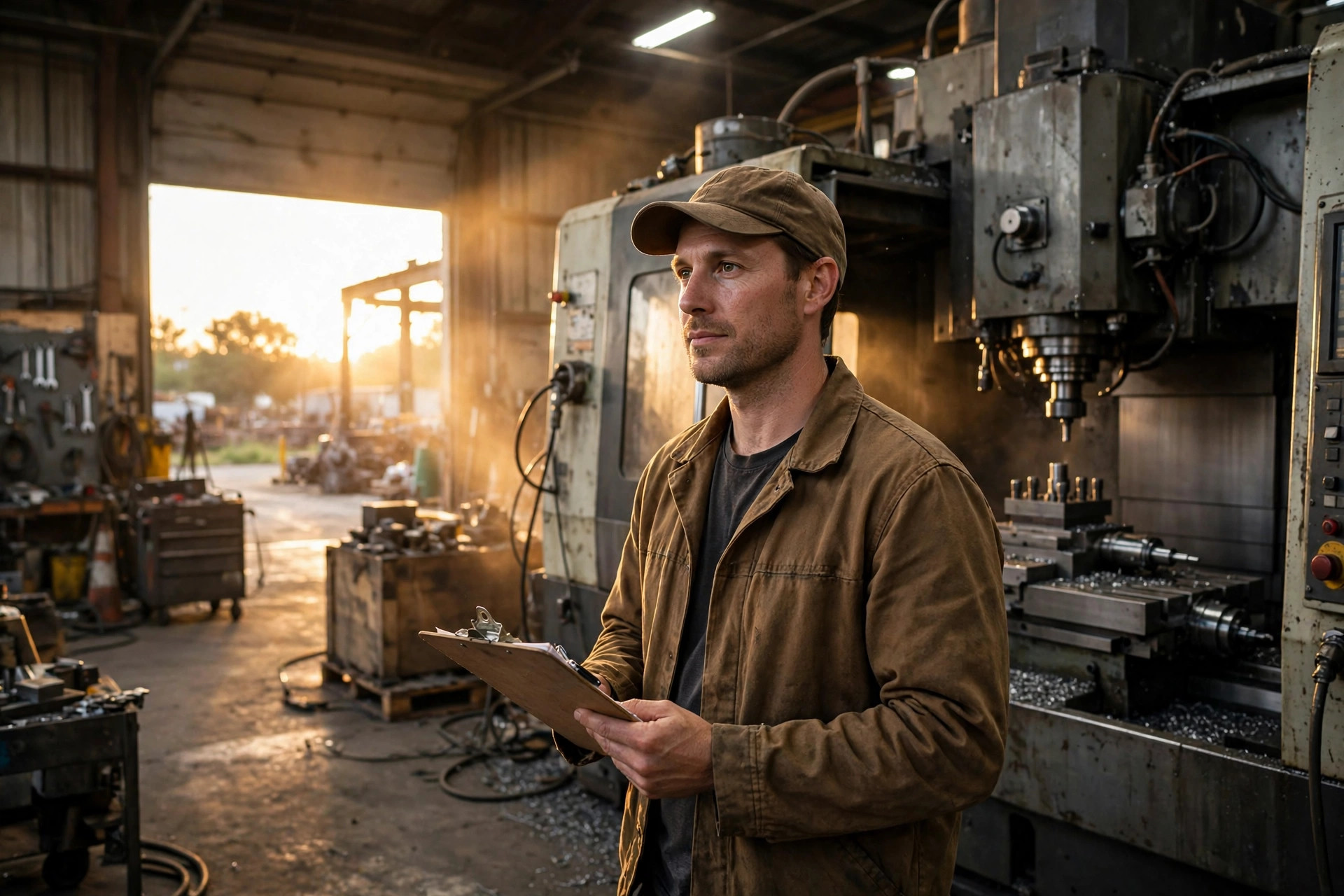
You need the equipment to grow, but the bank said no because of a credit score you can't fix this quarter. This is exactly the spot where equipment financing works differently from every other business loan: the asset you're buying is the lender's collateral. If you stop paying, the lender repossesses the machine — which means your credit score is the second thing they look at, not the first. That one mechanical fact is why owners with bruised credit can get approved for a $60,000 CNC machine or a $90,000 excavator when an unsecured line of credit is completely out of reach.
Why the equipment matters more than your credit score
Think about how a lender prices risk. With an unsecured loan, the only thing backing the repayment is your track record — your credit score does all the work. With equipment financing, the lender has a second way out: the machine has resale value. That changes the whole conversation:
- The lender cares about the equipment first. Standard, high-demand equipment (trucks, excavators, CNC machines, commercial ovens, medical imaging) with strong resale markets is the easiest to finance. Obscure, single-purpose, or highly customized equipment is harder — the lender can't count on reselling it.
- New vs. used matters. New equipment from a dealer is the smoothest deal — the value is clear and verifiable. Used equipment is absolutely financeable, but the lender will appraise it and usually advance less against the value (lower loan-to-value).
- Your credit sets the price, not the answer. This is the key distinction from bank lending. Bad credit doesn't mean "no"; it means "bigger down payment and a higher rate." The section below shows exactly what each tier looks like.
For the industry-specific picture, see our guides to business funding for trucking companies (trucks are the classic equipment-finance deal) and MCA for dental practices (where equipment financing competes directly with cash advances on chair and imaging purchases).
The bad-credit tiers: what your score actually unlocks
These are the working tiers we see from alternative equipment lenders day to day. Banks are stricter — most bank equipment programs want 650+ — but the alternative market, which funds most of these deals, works on roughly these bands. (Illustrative ranges; your actual quote depends on the equipment, the seller, and your revenue.)
| Credit band | Typical down payment | Typical rate range | What you can finance |
|---|---|---|---|
| 600+ | 10% (sometimes $0 for top profiles) | Roughly 7–12% APR | New or used equipment, 12–72 month terms, sale-leasebacks, soft costs (installation, delivery) often included |
| 550–600 | 10–20% | Roughly 12–20% APR | Standard new or lightly-used equipment, 12–60 month terms; lender verifies revenue more closely |
| 500–550 | 20–30% | Roughly 18–28% APR | Standard equipment with strong resale value only, 12–48 month terms; more documentation, often a personal guarantee |
| Below 500 | 30%+ or co-signer | Lender-specific | Usually limited to essential equipment with large down payment, or a co-signer brings the deal into the 500+ band |
Notice the pattern: the down payment is where the risk gets priced. Moving from 10% down to 25% down tells the lender you're sharing the risk, and that matters more to them than the last 60 points of your score. If you're sitting in the low 500s, the single highest-ROI move before you apply is saving a bigger down payment — it opens more lenders and better rates than any credit-repair trick you can do in 90 days.
The honest math: the same $60,000 machine at three credit tiers
Rates look abstract until they're dollars. Take a $60,000 CNC machine financed over 48 months, with the down payment and rate each tier typically commands. (Illustrative estimates — your quote will differ.)
| 600+ score | 550–600 score | 500–550 score | |
|---|---|---|---|
| Down payment | $6,000 (10%) | $9,000 (15%) | $12,000 (20%) |
| Amount financed | $54,000 | $51,000 | $48,000 |
| Illustrative rate | ~8% APR | ~14% APR | ~20% APR |
| Monthly payment | ~$1,319 | ~$1,394 | ~$1,460 |
| Total paid (payments + down) | ~$69,300 | ~$75,900 | ~$82,100 |
Two things to take away. First, the difference between the top and bottom tier is real — roughly $12,800 over four years on this example. Second, compare the bottom tier to what a merchant cash advance costs for the same $60,000: an MCA at a 1.4 factor rate would cost $84,000 before you even get a term longer than a year, and the daily debits would strangle the cash flow of a shop that just bought new equipment. That's the honest comparison behind our MCA vs. line of credit math — equipment financing is secured, so it should always be meaningfully cheaper than unsecured cash. If someone quotes you equipment financing at MCA-like costs, you're not looking at equipment financing. For the broader cheapest-capital-versus-fastest-cash decision, see our MCA vs. SBA loan comparison with the honest $100,000 math on both sides.
Sale-leaseback: when you already own the equipment
There's a second, less-known version of this product that matters enormously to owners with bad credit. If you already own equipment free and clear — a paid-off truck, an owned CNC machine, a commercial kitchen — a sale-leaseback lets you sell it to a lender and lease it back immediately. You keep using it exactly as before; the cash it unlocks (typically 50–70% of the appraised value) goes into the business as working capital.
- How it works: the lender appraises the equipment, buys it from you, and leases it back to you on a 24–60 month term. At the end you can buy it back for a set residual (often $1 or 10% of the original value).
- Credit bar: often lower than standard equipment financing, because the lender already holds the asset — there's no delivery or fraud risk on a machine you can walk them up to.
- When it's the right move: you own machinery outright, you're cash-strapped, and the equipment's resale value is real. It's the closest thing to a secured line of credit that bad credit can buy.
- When it's not: if the equipment is your production bottleneck and you're tight on cash, a missed lease payment means the lender repossesses the tool your business runs on. Only do this if the lease payment is comfortably inside your cash flow.
Red flags: three traps in bad-credit equipment deals
The lower your score, the more fine print matters — because the offers get more creative at the bottom of the credit ladder. Watch for these three specifically:
1. Balloon traps
Some bad-credit deals keep the monthly payment low by leaving a large balloon payment due at the end of the term — say, $12,000 still owed after 48 months of "affordable" payments. If the contract doesn't show you the end-of-term number in the first two pages, ask for it directly. A real equipment loan amortizes to zero; a balloon structure means you're financing twice.
2. Personal guarantees on risky deals
A personal guarantee on a 600-score deal for a standard machine is normal — the lender is sharing risk and wants skin in the game. What's not normal is a blanket personal guarantee that reaches beyond the equipment to your home or savings on a deal where the machine already covers most of the loan value. Read the guarantee's scope; it should match the deal's risk, not exceed it.
3. Broker markup on the rate
Equipment financing runs through brokers more than most products, and there's a legal, invisible profit center in many of them: the lender quotes the broker a rate, and the broker marks it up a few points before showing it to you. On a $60,000 machine, two hidden points cost you thousands over 48 months. The fix is one sentence: "Show me the lender's actual rate quote." An honest broker will; a markup-heavy one will change the subject. (This is also why our offer comparison checklist exists — the same markup game runs in every product.)
The real qualification bar
- Time in business: most alternative equipment lenders want 6+ months; 2+ years opens the best terms
- Revenue: roughly $100,000+ annual revenue (or ~$10,000/month) for most bad-credit equipment programs
- Credit: 500+ for most alternative lenders; 600+ for near-bank pricing; below 500 usually needs a co-signer or 30%+ down
- Equipment: standard equipment with a real resale market; used is fine, but expect a lower loan-to-value than new
- Down payment: 10–20% for most deals; 20–30% in the low 500s
- Documents: 3–6 months of bank statements, the equipment quote or invoice, and a driver's license — that's the whole file for most applications
When equipment financing isn't the answer
Honest edge cases, because this product isn't universal:
- You need working capital, not equipment. If the real problem is payroll or inventory, financing a machine you half-need is the expensive way to get cash. A sale-leaseback on equipment you own can bridge this — or look at invoice factoring if you're sitting on receivables.
- The equipment is single-purpose or custom. Lenders struggle to price resale on machinery nobody else can use. Expect a lower advance or a flat no.
- You're drowning in MCA debt already. New payments on top of daily debits is how businesses break. Fix the stack first — see our guide to refinancing a merchant cash advance — then finance the equipment.
- The machine won't pay for itself. The old rule still holds: if the equipment doesn't generate more than its payment, you're buying stress. Run the number before you run the application.
Frequently asked questions
Can you get equipment financing with a 500 credit score?
Sometimes. The machine itself is the lender's collateral, so some alternative lenders will work with scores in the low 500s — but expect a larger down payment (often 20% or more), a shorter term, and a higher rate than borrowers with stronger credit. Below 500, most lenders want a co-signer or will only finance essential equipment with a very large down payment.
How much down payment do you need for equipment financing with bad credit?
Plan on 10–20% of the equipment cost, with the higher end for lower scores. A borrower at 600+ might put down 10%, while a borrower in the low 500s may be asked for 20–30% plus extra documentation. The down payment is where credit risk gets priced — more cash in the deal means a more lenient credit bar.
Is equipment financing better than an MCA when your credit is low?
For buying equipment, almost always yes. Equipment financing is secured by the machine, so rates are typically a fraction of an MCA's factor-rate cost — and you end up owning a tangible asset. An MCA can be faster to get, but daily debits at a 1.3–1.5 factor rate are the wrong tool for a multi-year asset purchase.
What is a sale-leaseback, and when does it make sense?
A sale-leaseback lets you sell equipment you already own free and clear to a lender, then lease it back — turning an idle asset into working capital, typically 50–70% of the equipment's appraised value. It makes sense when you own machinery outright but are cash-strapped; you keep using the equipment while the cash funds the business.
What should you watch out for in bad-credit equipment financing deals?
Three red flags: balloon payments that leave a huge lump sum due at the end of the term, personal guarantees attached to high-risk deals that put your home and savings on the line, and broker rate markup — where the broker quietly adds points to your rate on top of the lender's price. Always ask the broker to show you the lender's actual rate quote.
How fast can you get equipment financing with bad credit?
Typically 2–5 business days from application to funding for standard equipment through alternative lenders, assuming you provide bank statements and the equipment quote promptly. Custom or imported equipment takes longer — often 1–3 weeks — because the lender has to appraise specialized machinery and confirm delivery.
Can equipment financing help rebuild your business credit?
It can, if the lender reports to business credit bureaus — ask before you sign, because not all alternative lenders report. A 12–36 month streak of on-time equipment payments is one of the cleanest ways to document creditworthiness, and many owners refinance into a cheaper rate or qualify for an unsecured line once the term builds a payment history.
Get the equipment your business needs — bad credit included
Get a no-obligation quote from our #1-ranked lender, Coast to Coast Fast Funding — $5K to $5M, funded in as little as 24 hours, 500 minimum credit. We shop 75+ lenders so you see real equipment-financing offers matched to your credit tier.
Start your free quote →Soft credit check · 60-second pre-qualification