What a dance studio actually costs to open — and to run
A dance studio sells recurring tuition, but it buys its room in one expensive gulp: a floor that protects dancers' joints, a wall of mirrors, barres, sound, and a lobby where parents wait. Owners who borrow well understand that mismatch — lumpy upfront cost, monthly recurring revenue — before they pick a product.
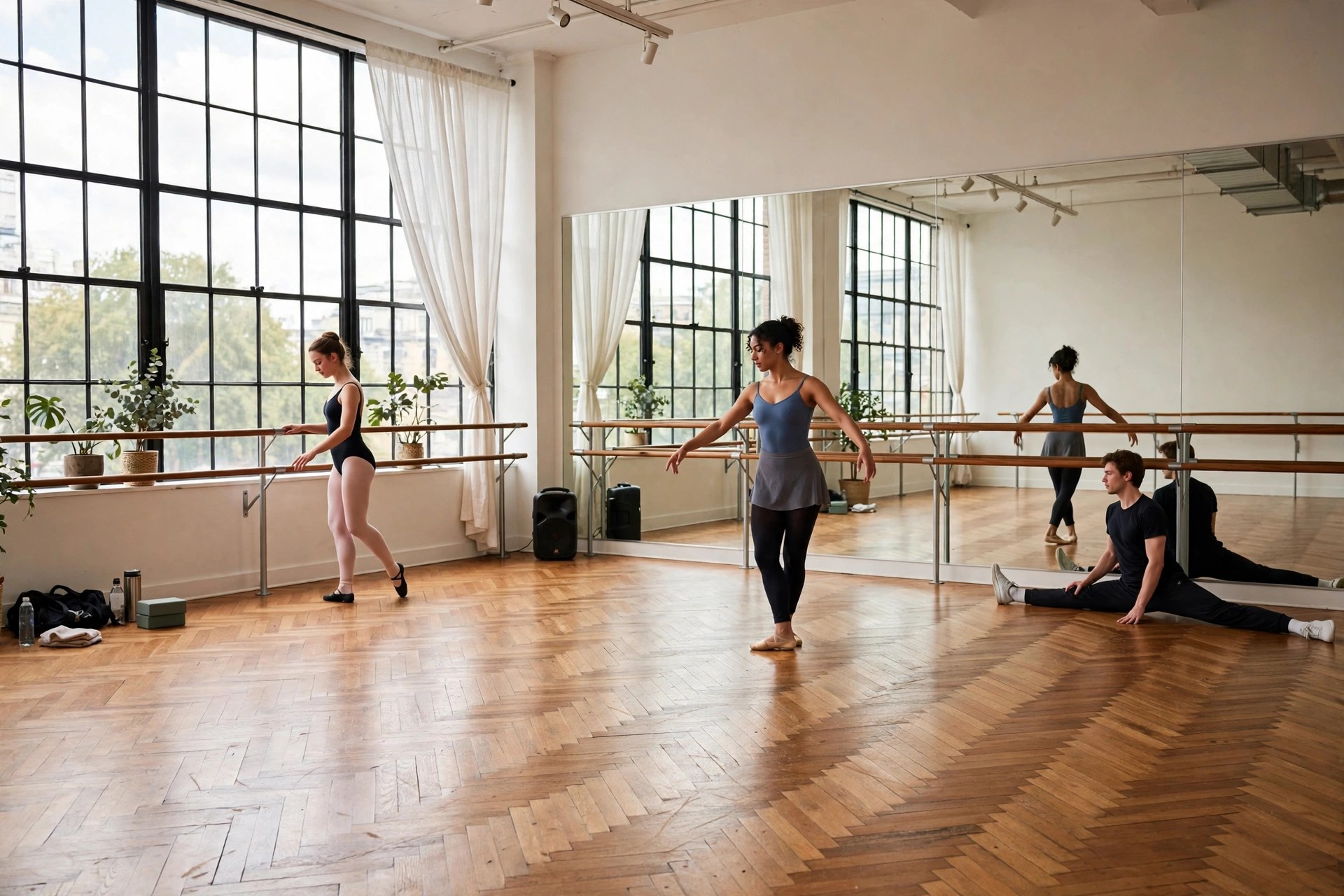
The published ranges are wide because the room itself is the variable. A small leased space with a basic Marley floor over the existing subfloor, mirrors on one wall, portable barres, a consumer sound system, and studio software opens for roughly $15,000 to $75,000. A larger multi-room studio with a sprung subfloor under professional Marley, full mirrored walls, fixed barres, and a lobby with a viewing window runs well above that. One detailed build-out budget puts a lean single-room opening at about $42,830 and a full version at about $99,000 including contingency and operating reserve — and multi-room facilities can reach $120,000 or more in equipment alone.
The floor is the line item you cannot cut corners on, because it protects dancers' joints and your liability. Basic Marley vinyl over an existing subfloor runs $2 to $5 per square foot for recreational studios; professional shock-absorbing Marley runs $7 to $10 per square foot. A full sprung subfloor under that Marley — the surface ballet and jazz instructors expect — costs roughly $8.50 to $13 per square foot installed. A 1,500-square-foot studio with basic Marley is around $4,500 in flooring; the same room with a sprung system is $13,000 to $19,500. Wall mirrors run $300 to $1,000 per panel, and a single mirrored wall in a mid-size room is $2,000 to $5,000. Portable barres cost $50 to $120 each; wall-mounted barres run $150 to $300 per section. A commercial sound system runs $500 to $4,000 — consumer equipment fails under daily use — and music licensing through ASCAP and BMI is a recurring annual cost that scales with studio size and class count.
Then there is the monthly reality. Revenue is recurring monthly tuition at roughly $60 to $150 per dancer per month, plus registration fees, recital tickets, and costume fees. Most new studios take 6 to 12 months to reach breakeven. Instructor pay runs $15 to $50 per hour, and a studio with part-time instructors carries payroll even in the slow summer months, when school-year enrollment dips and camps have not yet filled. A studio that looks healthy in October, with full classes and a recital fund building, can be thin in July — and that is exactly what a lender will see in the statements.
The five cash demands of a dance studio
1. The room. Floor, mirrors, barres, sound, soundproofing, ventilation. A space that was previously a studio or gym drops this cost dramatically; a raw commercial unit is the most expensive version. This is a term loan or equipment-financing job, not an advance: the room pays back over years of tuition.
2. The second room. The classic growth step: enrollment outgrows one room, and the owner adds a second studio before the tuition to fill it exists. Equipment financing covers the second floor and mirrors; the float until enrollment catches up is a different product.
3. The recital float. Costumes, venue rental, and production costs land months before ticket revenue arrives. A line of credit covers the gap and gets repaid when tickets sell.
4. The summer dip. School-year enrollment ends, summer camps and intensives have not yet filled, but rent and instructor retainers continue. A line opened during the strong fall covers the dip; a daily-debit advance through the summer makes it deeper.
5. The enrollment push. A new session, a new location, or a new program (adult classes, competition team) needs marketing and a few months of runway before tuition covers it. Short-term working capital fits when the enrollment pipeline is real: trial classes booked, not hoped for.
Need working capital this week?
Apply Now →Free to apply · Soft credit check only · Funding in 24–72 hoursThe product map: what fits which need
Build-outs and second rooms belong on term loans or equipment financing, where the floor, mirrors, and sound secure the loan and payments match their working life. The recital float and the summer dip belong on a line of credit: drawn only when needed, repaid when tickets sell or fall enrollment returns. A single fast gap — a sound system that fails the week before recital, a costume order due before ticket money lands — is where a revenue-based advance earns its cost, because the collection event is defined and near.
What does not fit: a daily-debit advance for rent, instructor payroll, or licensing. Those costs are permanent, and debits do not pause for the summer. A studio paying a daily debit through July is borrowing against September tuition that has not arrived yet.
What lenders check on a studio file
Lenders underwrite dance studios on the same core documents as any business — three months of business bank statements, time in business, and deposit consistency — plus three things specific to the trade. First, enrollment evidence: active student counts, tuition billing records, and retention from session to session. A studio with 80 students paying monthly is a very different file from a studio with 80 followers. Second, seasonality: a full-year revenue picture showing the summer dip honestly, because lenders underwrite the trough. Third, instructor structure: employees versus contractors, and whether the studio survives losing any single teacher.
Three things strengthen a studio file more than anything else. A tuition billing history showing recurring monthly revenue, not just recital spikes. Clean statements with steady deposits and no unexplained overdrafts. And a clear separation between business and personal money — costume fees and ticket revenue documented, because undocumented cash is invisible to an underwriter.
Five funding mistakes dance studios keep making
1. Financing the whole build-out on an advance. A $50,000 room repaid by daily debits crushes the studio before enrollment fills it. Long-lived improvements need long repayment.
2. Adding a second room before enrollment proves it. A second floor, mirrors, and sound system cost real money before the tuition to fill them exists. Fill the waitlist first.
3. Borrowing against recital month. Recital tickets and costume fees are a spike, not a run rate. Lenders size on the average month, and so should the owner.
4. Skipping the sprung floor to save money. A cheap floor costs dancers' joints, and an injury costs the studio far more than the floor upgrade — in liability, in reputation, and in lost enrollment.
5. Forgetting music licensing and insurance in the budget. ASCAP and BMI licenses, liability insurance, and instructor coverage are recurring costs. A budget that omits them is short from day one.
How fast a studio can get funded
Revenue-based products typically fund in 24 to 72 hours from a complete application, once bank statements are verified. Equipment financing takes days to weeks depending on the asset and the file. A line of credit takes days to a couple of weeks to open, then draws are immediate. SBA-backed loans for a purchase or major build-out take the longest and should be started a quarter before the money is needed.
The practical move: open the line during a strong stretch, keep it mostly undrawn, and use advances only for defined gaps. Gather three months of statements before you start, and the clock runs from day one.
Frequently asked questions
Can a dance studio get a business loan?
Yes. Dance studios qualify for lines of credit, revenue-based advances, equipment financing, and term loans through third-party funders, based on enrollment, recurring tuition revenue, seasonality, bank statements, and instructor structure. A tuition billing history is often the strongest part of the file.
What do lenders check for dance studio funding?
Active enrollment and tuition billing records, retention from session to session, the full-year revenue picture including the summer dip, instructor structure, and bank statement health. Lenders underwrite the trough month, not the recital month.
How fast can a dance studio get funded?
Revenue-based products typically fund in 24 to 72 hours from a complete application, once bank statements are verified. Equipment financing takes days to weeks, and SBA-backed loans for acquisitions or build-outs take longer.
Is a merchant cash advance good for a dance studio?
It can be, for a single fast gap with a defined collection event, such as a sound system that fails the week before recital or a costume order due before ticket money lands. For permanent costs like rent or instructor payroll, a line of credit usually fits better, because daily debits do not pause for the summer.
What documents does a dance studio need to apply?
Recent business bank statements, typically the last three months, are the core requirement. A photo ID and a voided check may be requested as optional verification items, but they are not upfront requirements for getting a quote. Enrollment and tuition billing records help where available.
How much funding can a dance studio get?
It depends on revenue, seasonality, and the product: revenue-based advances are usually sized as a multiple of monthly revenue, while lines, equipment loans, and term loans depend on the broader file. Ask for the total repayment in dollars before accepting any offer.
The best offer is the one you compare
Get a no-obligation quote from our #1-ranked lender, Coast to Coast Fast Funding — $5K to $5M, MCA and revenue-based products that fund in 24–72 hours with soft-pull-only applications. We shop 75+ lenders so you can compare the true cost of every offer side by side.Apply Now →Soft credit check · 60-second pre-qualification · (352) 809-3201