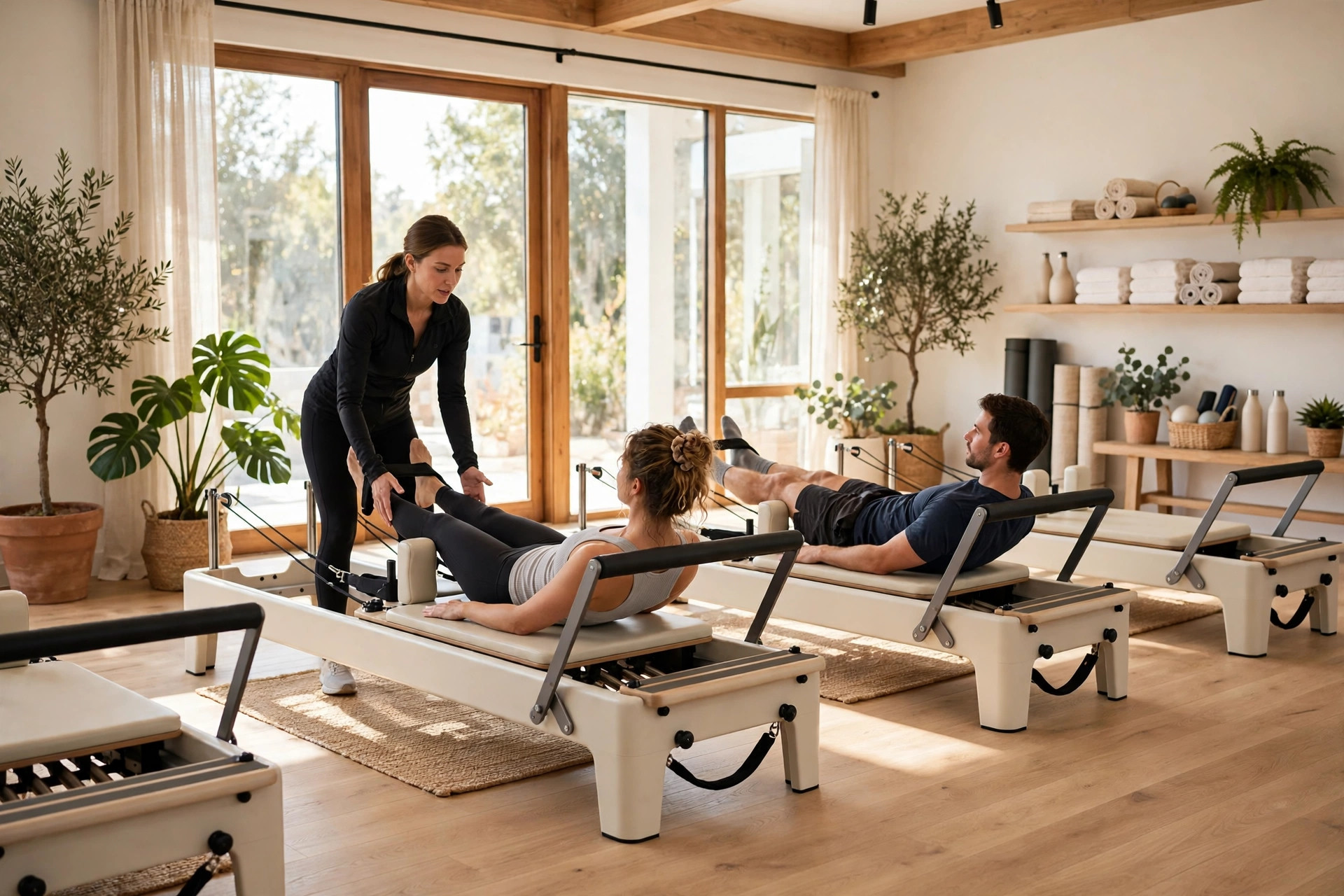
Yoga, Pilates, and boutique fitness studios run on a different economy than big-box gyms. Classes are small, prices are premium, and the equipment — reformers, Cadillacs, sprung floors — costs real money before a single client books. This guide covers what boutique studios actually borrow for, what those builds cost in 2026, which product fits each need, and what funders weigh on a studio file.
The boutique model is equipment-heavy and capacity-capped: every class seat is a machine or a mat, so revenue is limited by reformer count, not floor space. That is why studio funding looks different from gym funding — the money goes into machines, build-outs, and the months of runway before memberships cover rent.
What boutique studios borrow for
Reformers and apparatus. Commercial-grade reformers are the single biggest capital outlay for a Pilates studio, and the count sets your class size. Towers, Cadillacs, chairs, and barrels follow. This is equipment financing's home turf: named assets with vendor quotes and long useful lives, funded with payments matched to the gear.
Build-outs. Sprung or floating floors, mirrors, soundproofing, showers, and a reception area that looks like the brand. Boutique build-outs run far above a mat-studio fit-out, and landlords in premium retail corridors expect the tenant to carry most of it.
Opening runway. The cost most new owners skip: 3 to 6 months of rent, instructor pay, and utilities while memberships build. A studio that opens with no cushion is one slow month away from a crisis loan.
Second locations and expansions. Adding a reformer room, a second studio across town, or a teacher-training program. These are term-loan or SBA territory when the timeline allows, because the amounts are larger and the payoff stretches over years.
Seasonal gaps. January surges, summer dips, and the back-to-school reset all move class bookings. A line of credit drawn for a slow stretch and repaid after the surge fits this pattern far better than a fixed-payment advance.
What a boutique studio build actually costs in 2026
Industry cost guides converge on the same shape: reformer count drives the budget. Commercial-grade reformers run $3,500 to $8,000 each, so an 8-machine studio carries $28,000 to $64,000 in reformers alone before towers, chairs, and props. Total startup ranges vary by source and scope:
| Build tier | Typical range | What it buys |
|---|---|---|
| Mat-based / lean | $30,000–$60,000 | Subleased or shared space, mats and props, one instructor, minimal build-out |
| Mid-range reformer studio | $75,000–$150,000 | Dedicated space, 4–8 reformers, professional build-out, one or two added instructors |
| Premium boutique | $150,000–$300,000+ | 10+ reformers, Cadillacs and chairs, designed reception, high-end finishes, full instructor team |
Other published guides put a typical US reformer studio at $150,000 to $350,000 all-in, and $180,000 to $620,000-plus once first-year costs are included. Treat any single number as a band, not a quote: rent is the swing factor. Suburban studio rents run roughly $3,000 to $6,000 a month, while prime city space runs $15,000 to $20,000, and landlords usually want several months' deposit before handing over keys. One widely cited rule: keep rent at or below 20% of projected gross revenue, or the math stops working.
Which product fits which studio need
| Need | Best fit | Why |
|---|---|---|
| Reformers, Cadillacs, apparatus | Equipment financing | Asset secures the loan; payments matched to equipment life |
| Build-out or second location | Term loan or SBA loan | Larger amounts, longer payoff, lower cost when time allows |
| Slow months / seasonal gaps | Business line of credit | Draw, repay, redraw as seasons turn |
| Emergency repair or same-week gap | Merchant cash advance | Decision in hours, funding in 24–72 hours |
| Opening runway (3–6 months) | Working capital loan | Covers rent and payroll while memberships build |
What funders actually weigh on a studio file
Bank deposits, not the class schedule. Funders underwrite on the last 3 months of bank statements: average monthly deposits, deposit frequency, and whether balances stay positive. A studio with steady membership billing and clean deposits is a fundable file even with a modest credit score.
Utilization, honestly stated. Six reformers cap every class at six people, so funders will ask how full classes run and what a class costs. In markets where members expect a polished boutique studio at $35 or more per class, a bare-bones fit-out can cost sign-ups — and funders notice when pricing and presentation do not match.
Lease terms. Time left on the lease matters, especially for build-out funding. A funder financing a six-figure fit-out wants to know the studio will still be in the space long enough to earn it back.
Instructor dependency. If one star instructor drives most bookings, that is a concentration risk. Studios with a bench of instructors and a brand clients follow — not just a person — underwrite better.
Seasonality, named and planned. A studio that surges in January and dips in summer is not a weak file — it is a seasonal file. Funders would rather see the pattern named and planned for than discover it in the statements.
The documents: short list, no surprises
- Last 3 months of business bank statements — the one document every funder requires
- Vendor quotes for reformers and apparatus being financed
- Lease copy, for build-out or expansion funding
- Class pricing and membership counts, to show utilization
- Photo ID and a voided check available if a specific product's verification asks — neither is required upfront to see offers
Mistakes that cost studio owners real money
Funding 10-year equipment with a 6-month advance. Daily-debit products are for short gaps, not long-lived assets. Match the payoff to the purchase, or the payments eat the margin the reformers were supposed to create.
Opening with no runway. The most common boutique failure is not a bad concept — it is running out of cash in month four, before memberships cover rent. Fund the cushion before you need it, not after.
Signing the lease before the funding is lined up. A signed lease with no build-out money is a countdown clock. Get the funding answer before the deposit is non-refundable.
Underpricing to fill classes. Discounting fills seats and empties margins. Funders read pricing as a signal: a studio charging boutique prices with boutique costs underwrites better than one racing to the bottom.
Frequently asked questions
How much does it cost to open a Pilates studio?
Industry cost guides put a mid-range reformer studio at $75,000 to $150,000 and a premium boutique at $150,000 to $300,000 or more, with reformers at $3,500 to $8,000 each. A lean mat-based studio can open for $30,000 to $60,000 in shared space. Your rent market and reformer count move the number more than anything else.
Can a yoga or Pilates studio get a business loan with bad credit?
Yes. Revenue-based funders weight bank deposits far more heavily than credit score, and scores in the 500s routinely get funded on studio files. Credit affects the cost of the offer, not usually the yes-or-no.
What is the cheapest way to finance reformers?
Equipment financing, in most cases — the machines secure the loan, which lowers the funder's risk and your cost. SBA loans are cheaper still for large build-outs, but take 30–90 days to close.
Do I need a voided check or photo ID to apply?
No — not to see offers. Bank statements and an application are the standard ask. A voided check or photo ID is sometimes requested for verification on specific products before funding, but neither is a universal upfront requirement.
How fast can a studio get funded?
Revenue-based products decide in hours and fund in 24–72 hours once statements are in. Term loans and lines of credit take days to a couple of weeks; SBA products take a month or more.
Should a studio take an MCA for a slow season?
Only if the math works: the margin on the returning bookings must comfortably exceed the total repayment cost. For recurring seasonal gaps, a line of credit you repay after the surge is almost always the cheaper structure.
Reformers to buy, a lease to sign, or a second room to build? See what you qualify for
From the first reformer to the second location — get a no-obligation quote from our #1-ranked lender, Coast to Coast Fast Funding. One application reaches multiple funders, so you see the actual market for your file.
Apply Now →Soft credit check · 60-second pre-qualification