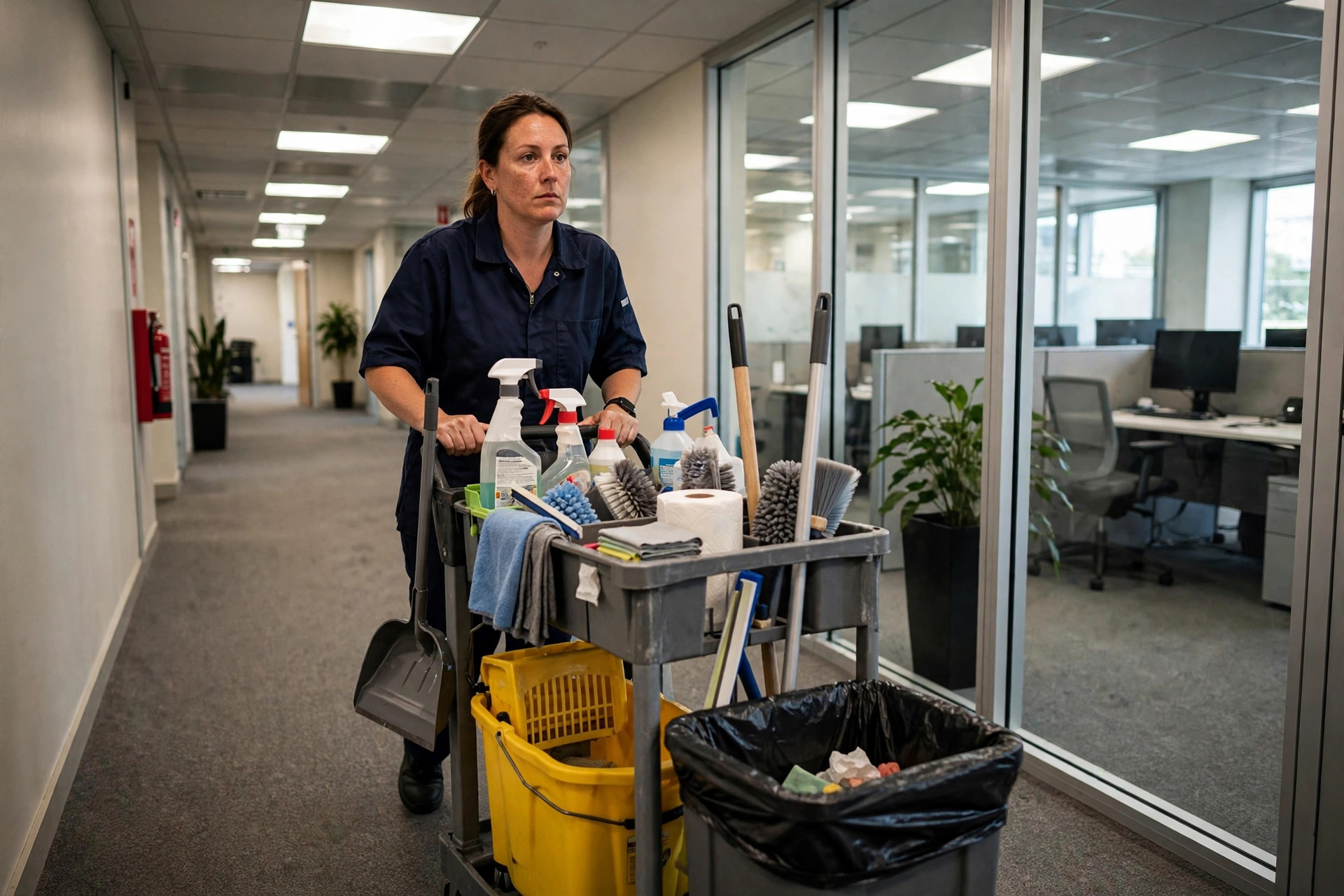
Cleaning companies have a funding profile most industries would envy: recurring contracts, low overhead, and growth that comes from winning accounts rather than inventing products. A commercial cleaning business with a dozen monthly contracts is exactly what underwriters like to see — predictable revenue, real cash flow, and a clear use for every dollar.
But the industry has a cash-flow shape that trips owners up. Equipment, crews, bonding, and supplies all cost money before the contract pays — and commercial clients pay on net-30 or net-60, not on completion. This guide covers what cleaning companies actually fund, which products fit each need, and the qualification reality behind the marketing.
What the money actually goes to
Commercial equipment. The step from residential to commercial cleaning is an equipment purchase: auto-scrubbers, burnishers, commercial vacuums, pressure washers, and the vehicles to move them. This is the cleanest funding case in the industry — the equipment secures the financing, which is why equipment financing often beats a general advance for this specific need.
Crews. Winning a 20-location contract means hiring, uniforming, and training people before the first invoice clears. Payroll is the number-one reason cleaning companies seek fast capital, and it is also the use case where product shape matters most — a daily debit colliding with a biweekly payroll is how good months turn bad.
Bonding and insurance. Commercial clients require janitorial bonds and liability coverage before work starts, and the premiums land upfront. It is a legitimate, fundable business expense — and one more reason to have capital before the contract, not after.
Supplies at scale. Buying chemicals, paper products, and consumables in bulk cuts per-job costs meaningfully, but it concentrates the spend. A short-term working capital injection for a bulk buy is one of the highest-ROI uses of funding in this industry.
The invoice float. The structural one. You clean in January, invoice February 1, get paid mid-March — while payroll runs every two weeks in between. This is a timing problem, not a profitability problem, and it deserves a timing-shaped product (more below).
The qualification reality
Marketing says "all businesses qualify." Underwriting says: show me the statements. Here is what funders actually weigh for cleaning companies:
Time in business. The biggest single factor. A company with two years of contracts and clean statements gets real options; a three-month-old company gets expensive ones. Most fast-funding products want to see at least several months of operating history.
Monthly revenue and consistency. Funders size offers as a fraction of monthly revenue, and they discount lumpy deposits. Twelve steady months of $25,000 beats six months of $40,000 followed by a cliff. Contract revenue counts — bring the contracts, not just the deposits.
Bank statement health. This is where files live or die: average daily balances, NSF frequency, and whether the deposits match the claimed revenue. Know what underwriters look for before you apply, because you cannot fix three months of statements in a week.
Client concentration. One client at 60% of revenue is a risk flag. Diversified contract books fund better and cheaper — another reason growth capital spent on winning the second and third anchor client pays for itself.
Which product fits which need
Equipment financing — for the machines. When the need is a named piece of equipment, finance the equipment. Terms match the asset's life, the rate reflects the collateral, and it keeps your general credit capacity free. Even challenged credit can often get equipment financed because the machine secures the deal.
Business line of credit — for the invoice float. Draw when payroll hits before the client pays, repay when the invoice clears, pay for what you use. For net-30/60 commercial billing, nothing matches the cash-flow shape better. The catch: lines are harder to qualify for than advances, so they reward the established company.
Term loan — for expansion with a plan. Opening a second crew, buying out a competitor's book of business, or funding a multi-month growth push. Fixed payments, defined end date, cheaper than daily-debit products when you qualify.
Merchant cash advance — for genuine time pressure. The contract starts Monday and you need the crew funded Friday. An advance is the fastest money in the industry, and speed has real value when a contract is on the line. The discipline: use it for the sprint, not the marathon — and never stack a second advance to service the first.
Red flags specific to this industry
Advance-fee "brokers." Anyone asking for payment before you see funding is running a play that is illegal in a growing list of states and a scam screen everywhere else. Legitimate brokers earn when you fund.
"Guaranteed approval" ads. No legitimate funder guarantees approval — the phrase is a lead-generation hook, and the product behind it is usually the most expensive one on the menu. Real qualification takes statements and underwriting.
Financing the float with daily debits. The single most common product-shape mistake in this industry: covering a net-60 invoice gap with a daily-debit advance, then watching the debit collide with payroll twice a month. If the need is timing, the product should flex with timing.
Equipment leases you did not read. Fair-market-value versus $1-buyout, maintenance bundles, evergreen clauses — equipment paperwork deserves the same read as any funding agreement. Know the end-of-term terms before you sign the beginning-of-term ones.
Frequently asked questions
Can a new cleaning company get business funding?
It is harder, but not impossible. Most funders want to see several months of bank statements with real revenue — brand-new companies with no revenue history have the fewest options. If you are pre-revenue, your realistic paths are equipment financing secured by the equipment itself, or waiting until you have a few months of deposits to show.
What do cleaning companies use business funding for?
The big four: commercial equipment (floor machines, vacuums, vehicles), hiring and training crews to service new contracts, bonding and insurance requirements that clients demand before work starts, and bridging the gap between doing the work and getting paid on net-30 or net-60 commercial invoices.
Is a merchant cash advance good for a cleaning business?
It fits specific situations: fast equipment purchases, winning a contract that needs upfront staffing, or seasonal gaps. It fits poorly as permanent working capital — daily debits and contract-based revenue can clash when a client pays late. For the invoice float specifically, a line of credit usually matches the cash-flow shape better.
How much funding can a cleaning company qualify for?
It scales with revenue and time in business. Funders generally size offers as a fraction of monthly revenue — a company doing $40,000 a month qualifies for meaningfully more than one doing $8,000. The fastest way to raise your ceiling is clean, consistent bank statements; see what funders actually look for on them.
Do I need a voided check or photo ID to apply?
No. Applications run on bank statements — the last three months are the standard ask. A voided check or photo ID is sometimes requested for verification on specific products, but neither is a universal requirement, and anyone demanding them upfront before showing you terms is a red flag.
What is the biggest funding mistake cleaning companies make?
Financing growth with the wrong product shape: taking a daily-debit advance to cover a net-60 invoice gap, then stacking a second advance when the first payment collides with payroll. Match the product to the use — equipment financing for equipment, a line of credit for the invoice float, and keep one obligation at a time whenever possible.
Cleaning company ready to grow? See what you qualify for
Equipment, crews, or contract float — get a no-obligation quote from our #1-ranked lender, Coast to Coast Fast Funding. One application reaches multiple funders, so you see the actual market for your file.
Apply Now →Soft credit check · 60-second pre-qualification