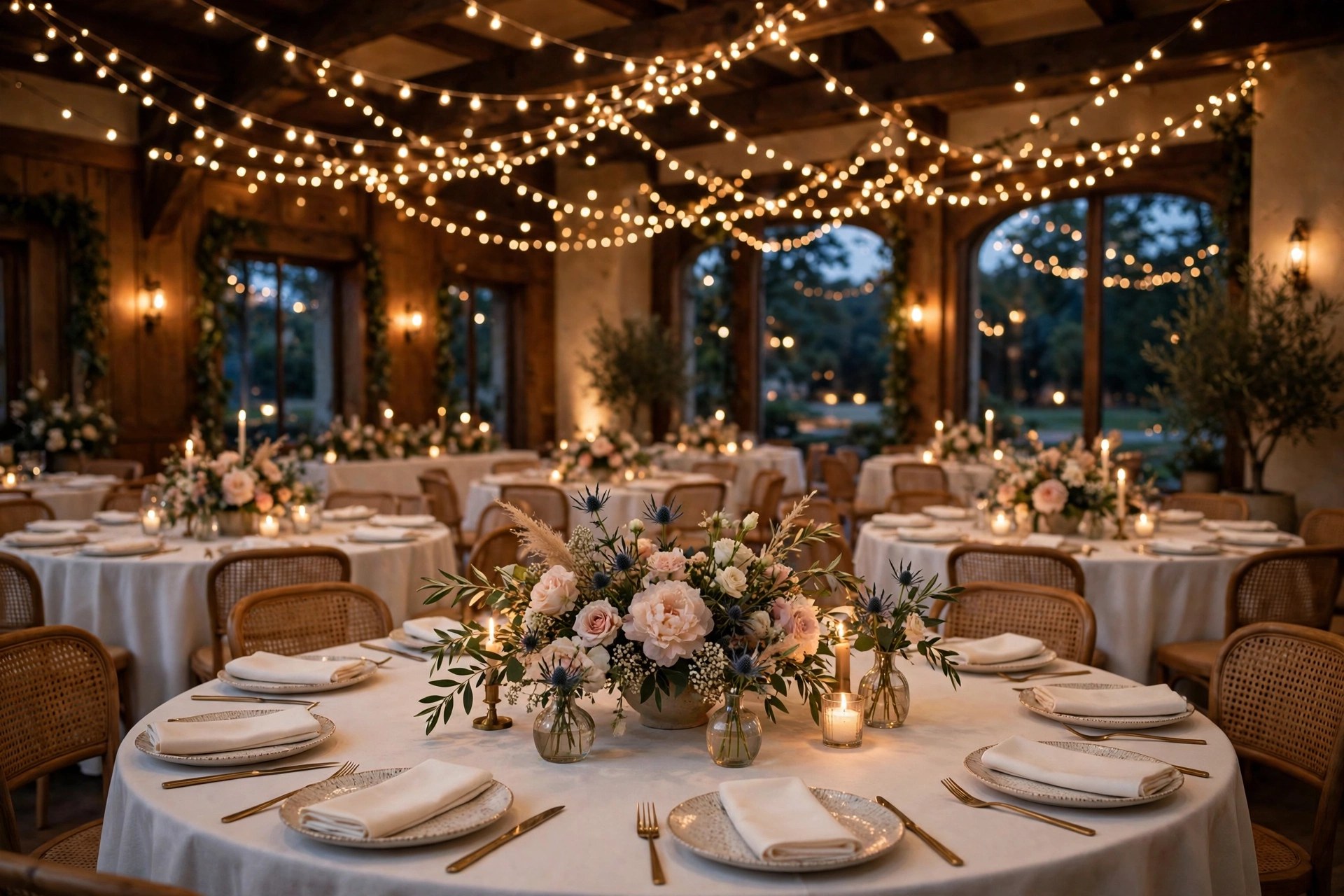
A wedding venue sells one thing: a date. Couples book 12 to 18 months out, pay deposits months or years before the event, and expect a room that looks like a photograph the moment they walk in. That business model creates a strange cash profile — large deposits arriving long before the costs they cover, long empty stretches between seasons, and sudden five-figure bills when a roof leaks, a dance floor warps, or a bridal suite needs rebuilding before Saturday's wedding. Funding a venue means funding that calendar, not just the building.
The market is big enough to justify the effort. The Knot's 2026 Real Weddings Study, covering 10,474 couples who married in 2025, found 89 percent booked a venue and the average wedding cost $34,000, with the average venue rental at $12,900 — up $700 from the year before. A venue that hosts 50 weddings a year at that average rental is a $645,000 revenue business before catering, bar, and add-ons. The funding question is how to bridge the gaps between the deposit, the build-out, and the wedding day.
The five cash demands of a wedding venue
1. The property and the build-out. Buying property runs $200,000 to $1 million or more; renovating an existing barn, mill, or historic structure typically lands between $250,000 and $1.5 million all-in, while leasing an existing event space and rebranding it can open for under $100,000. Mid-sized professional venues generally need $250,000 to $700,000 to launch. Renovation is the biggest line and the least predictable — old buildings hide plumbing surprises, and zoning and event-use permits alone can take 6 to 18 months.
2. Furniture, decor, and AV. Tables, chairs, linens, staging, and lighting run $50,000 to $200,000 for a mid-sized room; professional sound, lighting, and AV systems add $20,000 to $150,000. These are the items couples photograph, so cutting them cuts bookings. Equipment financing fits here — the asset secures the loan and the payments can match the equipment's working life.
3. The off-season float. Wedding demand peaks in spring and fall and thins in winter and deep summer. Payroll, utilities, insurance, and loan payments do not thin with it. A venue's monthly operating burn runs $5,580 to over $100,000 depending on size, with staff payroll alone ranging from about $1,000 to $60,000 a month. A line of credit opened during a strong season is the standard tool for the trough — draw in January, repay from spring deposits.
4. The deposit calendar mismatch. Deposits arrive months or years ahead, but the costs they fund — staffing, catering prep, flowers, cleaning crews — land in event week. A venue that spends deposits on the build-out instead of reserving them for event costs ends up borrowing to host weddings it already sold. Lenders look hard at this: a file that shows deposits segregated from operating cash reads very differently from one that spent them.
5. The emergency repair. A failed HVAC unit in July, a flooded getting-ready suite, a dance floor damaged at a Saturday reception — venues cannot postpone repairs to next quarter, because next Saturday's wedding is already sold. A revenue-based advance fits a single fast gap with a defined collection event: the repair is done by Friday, the wedding happens, the deposit and final payment cover the debit.
Need working capital this week?
Apply Now →Free to apply · Soft credit check only · Funding in 24–72 hoursThe product map: what fits which need
Working capital advances and revenue-based products, typically $10,000 to $500,000 and funding in 1 to 3 days, fit the emergency repair and the short seasonal gap. A business line of credit, typically $25,000 to $1 million and revolving, fits the off-season float and the deposit calendar — draw when bookings thin, repay when deposits land. Equipment financing, $5,000 to $5 million over 2 to 7 years, fits AV, kitchen, and outdoor equipment. Term loans, $50,000 to $5 million or more over 1 to 10 years, fit renovations and expansions. SBA 7(a) loans, up to $5 million over up to 25 years, and SBA 504 loans, up to $5.5 million over 10 to 25 years, fit property purchases and major fixed assets — but take 30 to 120 days, so they must be started a quarter before the money is needed.
The rule that ties it together: match the repayment schedule to the cash event that repays it. Float gets a line. An asset gets equipment financing. A single gap gets an advance. A transformation gets a term loan. Funding a permanent cost — year-round payroll, the mortgage — with a daily-debit advance is the mistake that sinks venues, because the debit continues long after the gap closed.
What lenders check on a venue file
Lenders underwrite venue files on the same core documents everywhere — three months of business bank statements, time in business, and deposit consistency — but they read them through a seasonal lens. A venue's bank statements will show deposit spikes months ahead of events and troughs between seasons; a file that explains that pattern beats one that pretends revenue is smooth. Three things strengthen a venue file more than anything else. First, a bookings calendar: signed contracts, dates, package values, and payment schedules, not a pipeline of inquiries. Second, a full-year revenue picture that shows the off-season honestly — lenders underwrite the trough. Third, deposit discipline: evidence that client deposits are reserved for event costs rather than spent on operations.
What weakens a file: deposits spent before the event, a single season carrying the whole year, and an owner who cannot explain a cancelled wedding's refund. None of these is fatal alone. Together they tell a lender the venue is thinner than the application claims.
Startup versus established: different funding, different lenders
A new venue faces a narrower menu. Some lenders offer startup equipment financing with as little as six months in business, and SBA microloans and small working capital products are available to newer venues, but a brand-new venue with no bookings history will struggle for a large revenue-based advance — there is no revenue to advance against. An established venue with two or three seasons of bookings, a signed calendar, and clean statements has the full menu: lines, advances, equipment financing, and term loans sized on demonstrated revenue. The practical move for a new venue is to open with the smallest viable build-out, book the first season hard, and let the bookings calendar become the borrowing base for the expansion.
Five funding mistakes wedding venues keep making
1. Spending deposits on the build-out. Deposits are event money. Spending them on renovations leaves the venue borrowing to host weddings it already sold.
2. Funding a permanent cost with a daily-debit advance. Year-round payroll and rent are forever. An advance is for a gap. Using one for the other means the debit continues long after the gap closed.
3. Borrowing against the peak season. A venue's best October is not its average month. Lenders size on the average, and so should the borrower.
4. Skipping the contingency budget. Commercial renovation projects commonly overrun 15 to 25 percent. A 10 to 20 percent contingency — $25,000 to $100,000 on most mid-sized venues — is not pessimism, it is the budget.
5. Waiting until the cash crisis to apply. Applications filed from strength — steady deposits, a signed calendar, no overdrafts — get better terms than applications filed from desperation. Apply before the gap, not during it.
Frequently asked questions
Can a wedding venue get a business loan?
Yes. Wedding venues qualify for lines of credit, revenue-based advances, equipment financing, and term loans through third-party funders, based on bookings, revenue per event, seasonality, bank statements, and license standing. A signed bookings calendar is often the strongest part of the file.
What do lenders check for wedding venue funding?
Signed bookings and their payment schedules, revenue per event, seasonality and the off-season trough, deposit discipline, and bank statement health. A bookings calendar showing dates, package values, and payment schedules strengthens any application.
How fast can a wedding venue get funded?
Revenue-based products typically fund in 24 to 72 hours from a complete application, once bank statements are verified. Equipment financing takes days to weeks, and SBA-backed loans for acquisitions or build-outs take longer.
Is a merchant cash advance good for a wedding venue?
It can be, for a single fast gap with a defined collection event, such as an emergency repair that must be done before Saturday's wedding. For permanent costs like year-round payroll or the mortgage, a line of credit usually fits better, because daily debits do not pause for the off-season.
What documents does a wedding venue need to apply?
Recent business bank statements, typically the last three months, are the core requirement. A photo ID and a voided check may be requested as optional verification items, but they are not upfront requirements for getting a quote. A bookings calendar and a full-year revenue picture help where available.
How much funding can a wedding venue get?
It depends on revenue, seasonality, and the product: revenue-based advances are usually sized as a multiple of monthly revenue, while lines, equipment loans, and term loans depend on the broader file. Ask for the total repayment in dollars before accepting any offer.
The best offer is the one you compare
Get a no-obligation quote from our #1-ranked lender, Coast to Coast Fast Funding — $5K to $5M, MCA and revenue-based products that fund in 24–72 hours with soft-pull-only applications. We shop 75+ lenders so you can compare the true cost of every offer side by side.Apply Now →Soft credit check · 60-second pre-qualification · (352) 809-3201