The startup tiers come first
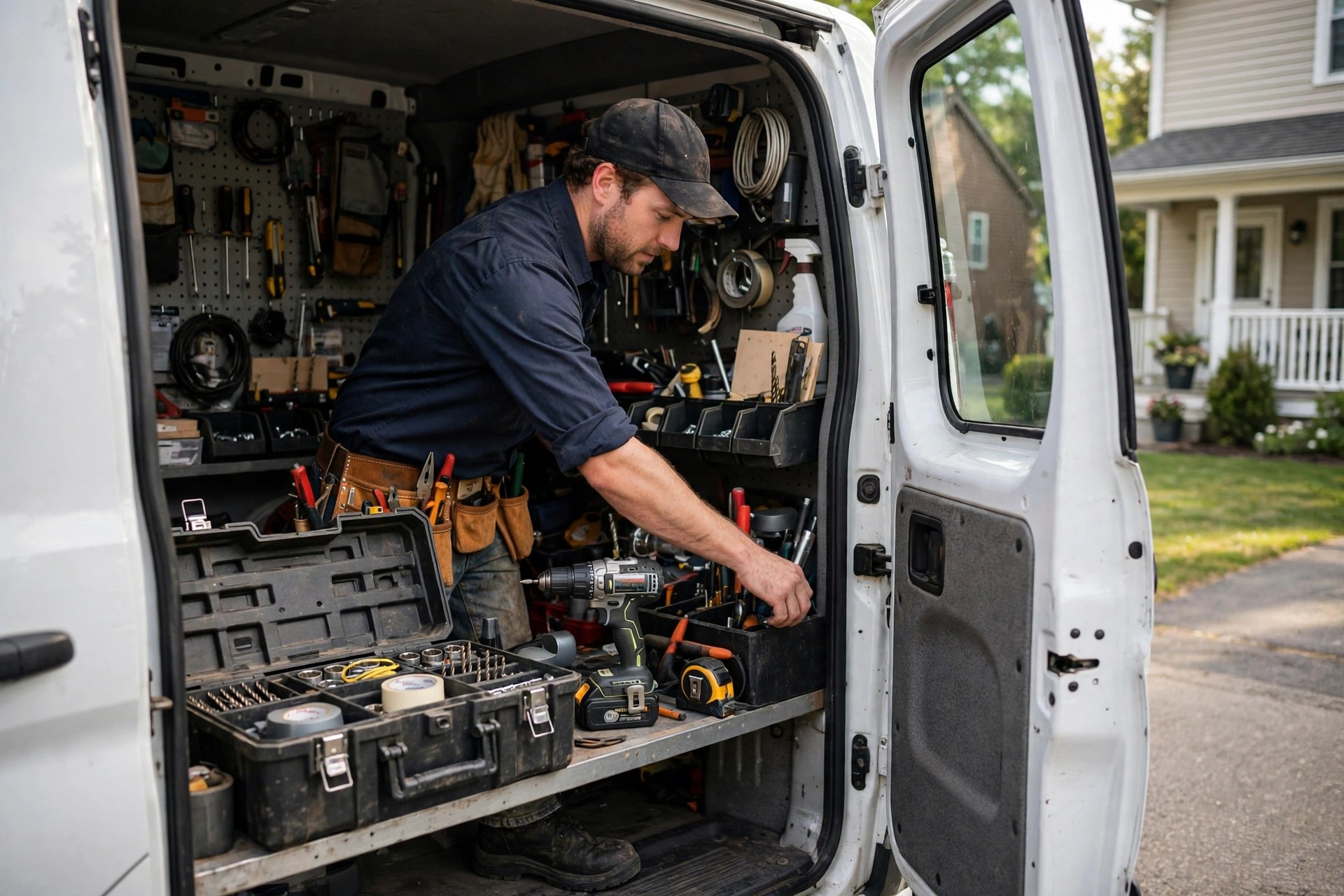
A handyman business is one of the cheapest real businesses to start, and that is both the opportunity and the trap: the low entry cost means anyone can hang a shingle, so the funding file has to prove this operator is a business, not a hobby. Industry guides put a lean start at roughly 2,000 to 6,000 dollars, a typical independent launch at 3,000 to 8,000 dollars, and a fuller setup at 5,000 to 10,000 dollars, depending on how much of the process is outsourced. The line items tell the story: power tools and hand tools run 800 to 2,800 dollars for a working set, a used pickup or cargo van runs 7,000 to 15,000 dollars when one is needed at all, registration and local licensing run 0 to 500 dollars, and general liability insurance runs a median of about 978 dollars a year, or 81 dollars a month, according to Insureon's handyman data, with commercial auto adding an average of 188 dollars a month where it applies. A lean first year for an operator who already owns a truck can run as low as about 1,286 dollars in tools, ladder, and a year of liability cover; a fuller first year with brushless tools, a business owner's policy, commercial auto, EPA lead-safe certification, and an LLC runs about 5,036 dollars. A funding file that names the truck, the tool list, and the insurance reads as a real business; a file that just says handyman reads as a guess.
The reason the tiers matter is that handyman revenue is lumpy by nature. Most jobs fall in the 100 to 500 dollar range and take a few hours, and the median handyman job in one Dallas sample cost 350 dollars, with 51 of 75 jobs under 500 dollars. Solo operators charging 50 to 100 dollars an hour, or 50 to 175 dollars an hour at the full range, can realistically earn 50,000 to 100,000 dollars a year when consistently booked — but consistently booked is the whole job. The first funding question is never how much the operator wants; it is whether the bookings exist to repay it, and from what.
The license limit is the business model
There is no handyman license in the United States. What exists instead is a dollar limit on unlicensed work that every state draws differently, plus a short list of trades a handyman may not touch without a trade license. California, Arizona, and Nevada cap unlicensed jobs at 1,000 dollars; Florida caps them at 2,500 dollars; Utah at 7,000 dollars; Washington and New York City have no dollar cap at all in the same sense. Electrical, plumbing, HVAC, and structural work generally require a trade license everywhere, and a building permit triggers licensing requirements even on small jobs. California requires a contractor license when labor and materials total more than 1,000 dollars, when a permit is needed, or when employees are used.
Underwriting a handyman file turns on where the operator sits against that limit. A handyman doing sub-limit repairs, TV mounting at 100 to 200 dollars a job, drywall patches, faucet swaps, and fence repairs is a different risk from one regularly pricing whole-room remodels that cross the limit. Lenders weight the service menu heavily, because the menu decides the average ticket, the ticket decides the deposit pattern, and the deposit pattern decides the advance size. A file that lists the services, the price list, and the booking channel — repeat customers, property managers, or a platform — underwrites itself. A file that cannot say what the operator actually does is a file that stalls.
The contract book is the handyman's version of a signed route. Property-management accounts, real-estate-agent turnover work, and small commercial maintenance contracts turn one-off jobs into recurring revenue, and recurring revenue is what lets a lender size an offer with confidence. A solo operator with three property managers sending steady turnover jobs is a stronger file than a solo operator with a bigger month but no repeat source. If the operator has contracts or standing accounts, they belong in the file.
Need working capital this week?
Apply Now →Free to apply · Soft credit check only · Funding in 24–72 hoursThe product map: what fits which need
A business line of credit fits the working-capital rhythm of handyman work: materials bought for a job before the customer pays, a slow week between bookings, a van repair that cannot wait for the next invoice. The line draws when needed and rests when it does not, which matches a business whose income arrives job by job. Revenue-based advances fit a single fast gap with a defined collection event, such as a van transmission failure in a week already booked solid, or a tool package that unlocks a category of jobs already calling in. Equipment financing fits the vehicle and the larger tool investments — a cargo van, a trailer, a pro-grade tool package — because those are identifiable assets with a working life measured in years, so the term can match the asset. A term loan fits the full expansion budget: a second van, a helper's wages through the ramp, a shop or storage unit, and the marketing to fill a second route. What does not fit is funding a whole second crew on a daily-debit advance repaid from one season of jobs — crews pay back over years, and daily debits do not pause for a slow month.
What funders check on a handyman file
Three months of business bank statements are the core document for an existing operator, and a new operator's file turns on the tool and vehicle quotes, the insurance binder, and the booking plan. Lenders also look at time in business, deposit consistency, existing advance positions, and — for larger term loans — broader financials. Deposit consistency matters more than any single good month: a handyman's deposits swing with bookings, so a file that shows the average honestly, with the slow weeks visible and explained, reads better than a file that cherry-picks the best month. Credit matters less for revenue-based products than deposit health does, but it still moves the price. If a funder will not put the total repayment in dollars in writing, that is the offer to walk away from, whatever the headline rate sounds like.
One practical note for operators: separate the money early. A handyman running jobs through a personal account forces the lender to untangle personal spending from business revenue, and that untangling costs time and approval size. A dedicated business account with three months of clean deposits is the single cheapest upgrade a handyman file can get, and it costs nothing but discipline.
Frequently asked questions
Can a handyman business get a business loan?
Yes. Handyman businesses qualify for lines of credit, revenue-based advances, equipment financing, and term loans through third-party funders, based on deposits, time in business, the service menu, and the booking book. An operator with property-management accounts underwrites very differently from one living job to job.
What do lenders check for handyman funding?
The service menu first — what work the operator actually does and at what ticket — then the vehicle and tool file, the insurance position, and the repeat-booking sources. A lean start runs 2,000 to 6,000 dollars, while a typical independent launch runs 3,000 to 8,000 dollars.
How fast can a handyman business get funded?
Revenue-based products typically fund in 24 to 72 hours from a complete application, once bank statements are verified. Equipment financing takes days to weeks, and SBA-backed loans for acquisitions or build-outs take longer.
Is a merchant cash advance good for a handyman business?
It can be, for a single fast gap with a defined collection event, such as a van repair in a week already booked solid. For a second crew or a shop it does not fit — durable expansion should not be repaid in months.
What documents does a handyman business need to apply?
Recent business bank statements, typically the last three months, are the core requirement. A photo ID and a voided check may be requested as optional verification items, but they are not upfront requirements for getting a quote. Tool and vehicle quotes, the insurance binder, the price list, and any property-management or standing-account agreements help where available.
How much funding can a handyman business get?
It depends on revenue, seasonality, and the product: revenue-based advances are usually sized as a multiple of monthly revenue, while lines, equipment loans, and term loans depend on the broader file. Ask for the total repayment in dollars before accepting any offer. A lean startup runs 2,000 to 6,000 dollars, a typical launch 3,000 to 8,000 dollars, and a fuller setup with a vehicle and pro-grade tools 5,000 to 10,000 dollars before a second crew.
The best offer is the one you compare
Get a no-obligation quote from our #1-ranked lender, Coast to Coast Fast Funding — $5K to $5M, MCA and revenue-based products that fund in 24–72 hours with soft-pull-only applications. We shop 75+ lenders so you can compare the true cost of every offer side by side.Apply Now →Soft credit check · 60-second pre-qualification · (352) 809-3201