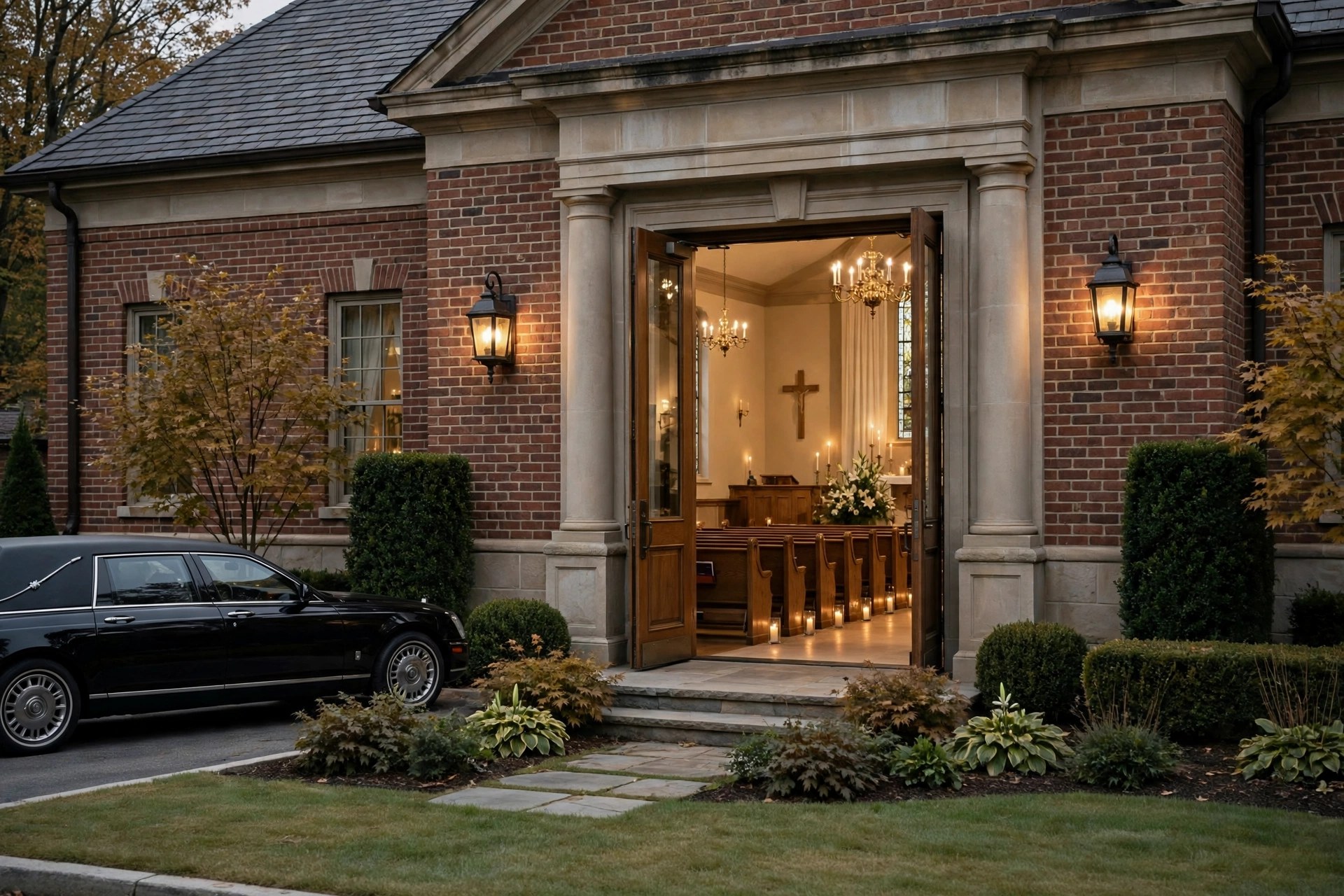
Funeral homes do not have a cash-flow problem. They have a timing problem layered on top of a capital problem. A facility, a prep room, a vehicle fleet, and a casket inventory can cost more than a year of profit, and they all wear out or need replacing on the same schedule. Meanwhile the revenue arrives one family at a time, often weeks after the service, while payroll, rent, insurance, and supply costs are due on the same day every month. That is the gap funeral home funding exists to close.
This guide covers how funeral businesses actually borrow: the five cash demands that recur in nearly every funeral home and crematory, which product fits each one, what lenders check on a funeral file, and the five mistakes that turn a good year into a scramble.
Why funeral homes borrow on a different calendar
Most service businesses sell a service and get paid the same day. A funeral home serves a family at the hardest moment of their lives and gets paid in pieces: insurance assignments that take weeks to process, pre-need trust disbursements on their own schedule, families paying in installments, and at-need balances collected after the service. The cost side does not wait for the slowest payer. The licensed directors are salaried, the facility is monthly, the refrigeration runs daily, and a hearse breakdown stops a funeral outright.
The industry's slow shift sharpens the edge. Cremation now accounts for a large and growing share of dispositions, and cremation services typically cost families less than traditional burial — which means the average revenue per case trends down even as facility, vehicle, and compliance costs trend up. A funeral home that built its economics on burial volume and now serves a cremation-majority market is running a different business than its building was financed for. That transition is exactly when outside capital matters most: to add a crematory, to renovate for celebration-of-life services, or to reposition pricing before the old model stops covering the mortgage.
Then there is the capital cliff. Funeral equipment is not a small purchase. A prep room, refrigeration units, a crematory retort, hearses, limousines, and transfer vans are capital assets with long lives and sudden failures, and a regulatory change — ventilation standards, emissions rules for crematories, FTC Funeral Rule compliance — can force a whole line of upgrades at once. Homes that plan for that cliff borrow on their schedule. Homes that do not borrow on the breakdown's schedule, which is always worse.
The five cash demands of a funeral home
1. The facility itself. Buying an existing funeral home typically runs $400,000 to $800,000 or more depending on location, size, and reputation, and building new can exceed $750,000 to $1,200,000 once land, construction, permits, and architectural fees are counted. Leasing is cheaper upfront but still demands large deposits and build-out costs. These are lumpy, planned-or-forced purchases that do not fit monthly cash flow.
2. Prep room and refrigeration equipment. Embalming tables, instruments, fluids, and safety equipment typically run $15,000 to $30,000, refrigeration units $5,000 to $15,000 depending on capacity, and a full prep-room and equipment package $75,000 to $200,000. A crematory retort is a separate capital item on top of that. Each one is essential, each one fails eventually, and none of them can wait for a good month.
3. The vehicle fleet. A new hearse costs $80,000 to $150,000, quality used models $30,000 to $60,000, and a full fleet — hearse, limousine, flower car, transfer van — easily doubles that. Vehicles are both a practical necessity and a visible symbol of the firm's professionalism, which means deferring replacement costs reputation as well as reliability.
4. Casket and merchandise inventory. Initial casket and urn inventory typically runs $20,000 to $50,000, and it must be replenished continuously. Families choose in the arrangement room, so the selection has to be on the floor — a home that stocks thin loses the sale to the home that stocks well.
5. The collection float. Insurance assignments, pre-need disbursements, and installment balances mean revenue recognized this month may not arrive for weeks. Monthly operating costs typically run $20,000 to $60,000, with staff the largest share. Growth in case volume is growth in float first and profit second.
Need working capital this week?
Apply Now →Free to apply · Soft credit check only · Funding in 24–72 hoursThe product map: what fits which need
There is no single right product for a funeral home. There is a right product per need, and mismatching them is the most expensive mistake in this guide.
A business line of credit fits the collection float and the merchandise cycle. Draw when insurance assignments are outstanding, repay when they clear, and the line is there again for the next cycle. For homes with steady case volume, this is usually the core facility, and it is worth opening during a strong stretch rather than during a crunch.
Equipment financing fits the prep room, refrigeration, crematory, and vehicles. The asset secures the loan, payments can match the asset's working life, and a crematory addition — the single highest-return capital project for many burial-heavy homes — is a textbook equipment and build-out loan.
Term loans and SBA-backed loans fit the big moves: buying the facility, buying out a partner, acquiring a neighboring home, or a major renovation for celebration-of-life spaces. These take longer — start a quarter before the money is needed — but they match a twenty-year asset with a long repayment schedule instead of a short one.
A revenue-based advance fits a single fast gap with a defined collection event: a refrigeration unit that fails on Monday and must be running by Friday, a hearse replacement that cannot wait for the next quarter, a chapel renovation before the busy season. What it does not fit is a permanent cost. Payroll and rent are forever; an advance is for a gap, and daily debits do not pause for a slow month.
What lenders check on a funeral home file
Lenders underwrite funeral files on the same core documents everywhere — three months of business bank statements, time in business, and deposit consistency — but they read those statements through a funeral lens. A funeral file is judged on case mix: the balance between burial and cremation, the average revenue per case, and whether the trend is stable or sliding. A file is judged on payer mix: insurance assignments, pre-need trusts, and at-need collections each carry different timing risk, and a home that can show its collection timeline by payer type is a stronger file than one that cannot. A file is judged on reputation risk: a single-location, family-name business lives on community trust, and lenders read reviews, complaint history, and license standing as part of the file.
Three things strengthen a funeral file more than anything else. First, a case-volume and revenue-per-case summary over twelve months: it shows the trend honestly, including the cremation shift, instead of letting the lender discover it. Second, a payer-mix and collection-timeline summary: what share is insurance, pre-need, and at-need, and how long each takes to collect. Third, clean statements: steady deposits, no unexplained overdrafts, and a clear separation between business and personal money.
What weakens a file: deposits that spike and vanish, a single payer source behind most of the revenue, and an owner who cannot explain a down quarter. None of these is fatal alone. Together they tell a lender the business is thinner than the application claims.
Five funding mistakes funeral homes keep making
1. Funding a permanent cost with a daily-debit advance. Payroll, rent, and insurance are forever. An advance is for a gap. Using one for the other means the debit continues long after the gap closed.
2. Borrowing against the best month. A funeral home's busiest month is not its average month, and case volume varies with season and circumstance. Lenders size on the average, and so should the borrower.
3. Ignoring the cremation shift in the file. A business plan that assumes burial economics while the market moves to cremation will not survive underwriting — or reality. Price the transition into the plan, and borrow for the crematory or renovation that answers it.
4. Presenting pipeline as backlog. Pre-need contracts are real, but they pay on their own schedule, and lenders verify. Unsigned arrangements and uncollected balances discovered during underwriting do more damage than a smaller honest book would have.
5. Waiting until the cash crisis to apply. Applications filed from strength — steady deposits, no overdrafts, a clear use of funds — get better terms than applications filed from desperation. Apply before the gap, not during it.
How fast funeral home funding moves
Revenue-based products typically fund in 24 to 72 hours from a complete application: a short form, a same-day decision, and three months of business bank statements. A line of credit takes longer to open — days to a couple of weeks — but once open, draws are immediate. Equipment financing usually closes in days to weeks depending on the asset and the file. SBA-backed loans for acquisitions or major build-outs take the longest and should be started a quarter before the money is needed.
The practical move for a funeral home is to open the line during a strong stretch, keep it mostly undrawn, and use advances only for defined gaps. Gather three months of statements before you start, and the clock runs from day one.
The bottom line for funeral homes
Funeral homes are essential, licensed, reputation-driven businesses with lumpy capital needs and slow collections — a combination that punishes thin cash reserves more than almost any other service industry. The homes that borrow well are the ones that match the product to the need: a line for the float, equipment financing for the prep room and fleet, a term loan for the building, and an advance only for the single fast gap. Borrow on your schedule, and the money stops being the constraint.
Frequently asked questions
Can a funeral home get a business loan?
Yes. Funeral homes qualify for lines of credit, revenue-based advances, equipment financing, and term loans through third-party funders, based on case volume, revenue per case, payer mix, bank statements, and license standing. A twelve-month case-volume and revenue-per-case summary is often the strongest part of the file.
What do lenders check for funeral home funding?
Case mix between burial and cremation and its trend, average revenue per case, payer mix across insurance assignments, pre-need trusts, and at-need collections, collection timelines, license standing, and bank statement health. A payer-mix summary showing how long each payer type takes to collect strengthens any application.
How fast can a funeral home get funded?
Revenue-based products typically fund in 24 to 72 hours from a complete application, once bank statements are verified. Equipment financing takes days to weeks, and SBA-backed loans for acquisitions or build-outs take longer.
Is a merchant cash advance good for a funeral home?
It can be, for a single fast gap with a defined collection event, such as a refrigeration unit that fails on Monday and must be running by Friday or a hearse replacement that cannot wait for the next quarter. For permanent payroll or facility costs, a line of credit usually fits better, because daily debits do not pause for a slow month.
What documents does a funeral home need to apply?
Recent business bank statements, typically the last three months, are the core requirement. A photo ID and a voided check may be requested as optional verification items, but they are not upfront requirements for getting a quote. A case-volume summary and a payer-mix summary help where available.
How much funding can a funeral home get?
It depends on revenue, seasonality, and the product: revenue-based advances are usually sized as a multiple of monthly revenue, while lines, equipment loans, and term loans depend on the broader file. Ask for the total repayment in dollars before accepting any offer.
The best offer is the one you compare
Get a no-obligation quote from our #1-ranked lender, Coast to Coast Fast Funding — $5K to $5M, MCA and revenue-based products that fund in 24–72 hours with soft-pull-only applications. We shop 75+ lenders so you can compare the true cost of every offer side by side.Apply Now →Soft credit check · 60-second pre-qualification · (352) 809-3201