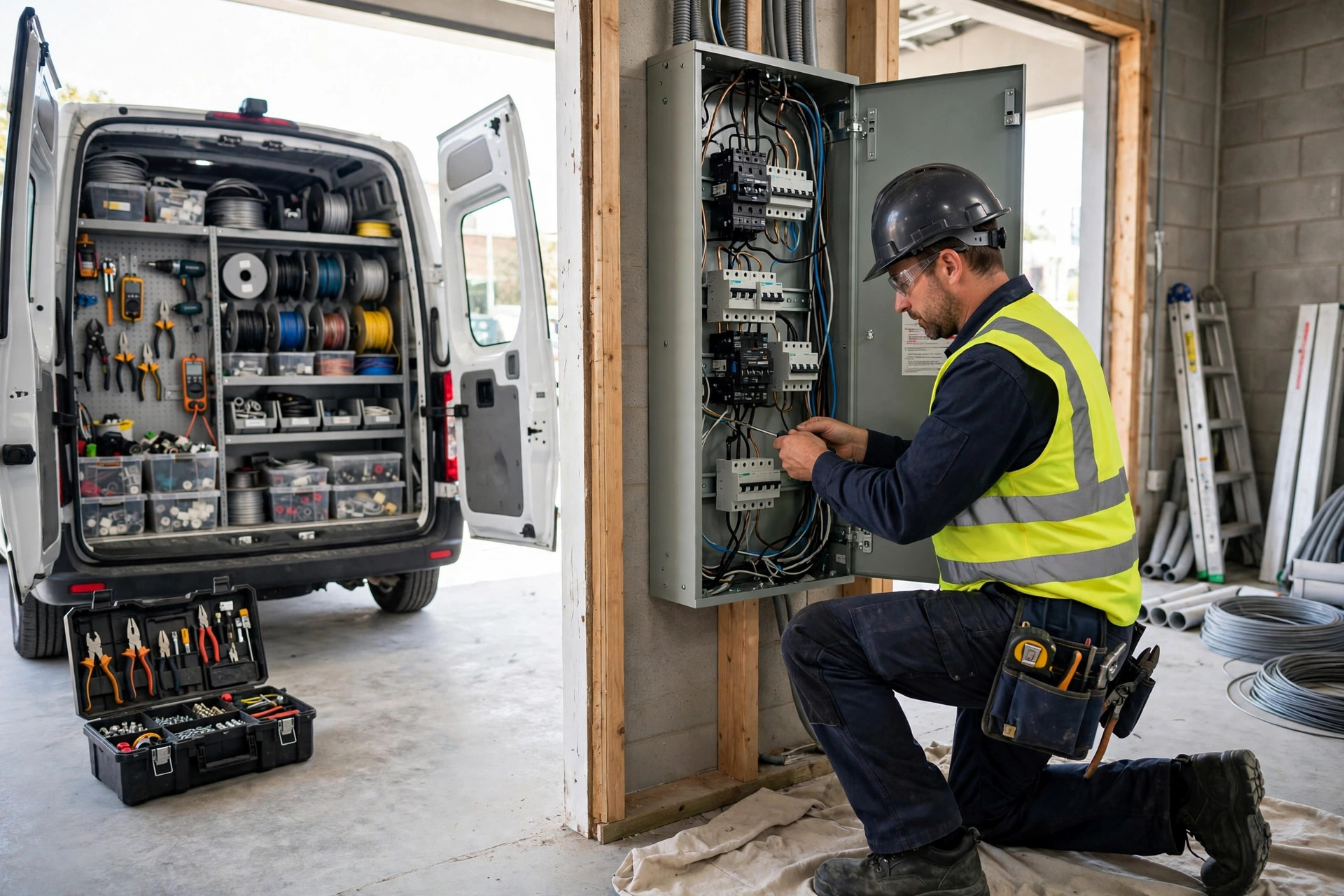
Electrical contracting looks like a simple trade from the panel — a van, a spool of wire, a meter — but the business underneath is one of the most cash-sensitive in the trades. Materials are bought before the job pays, commercial clients pay on 60- to 90-day terms, and the work itself arrives in waves: a commercial build-out, a panel-upgrade backlog, an EV-charger retrofit rush. This guide covers what electrical contractors actually borrow for, what opening, growing, or equipping one costs in 2026, and which product fits each need.
The funding map for an electrical contractor splits into five buckets: covering materials and payroll on jobs that pay on completion, equipping vans and crews, catching a commercial surge, carrying insurance, licensing, and bonding costs, and adding a second crew or a commercial division. Each bucket has a different best product, and the single most important underwriting fact in all five is timing: the contractor pays first and gets paid last, so the product has to match the gap, not just the amount.
What electrical contractors borrow for
Materials and payroll float. The most common first funding need. A contractor buys cable, conduit, panels, and breakers up front — suppliers often want a deposit or payment on delivery — pays the crew weekly, and gets paid by the homeowner on completion or by the general contractor 60 to 90 days later. A working-capital advance or line of credit sized to the average job pipeline is what keeps crews working between the supplier invoice and the final check.
Vans, tools, and test equipment. The capital-heavy route. A service van with racking, a second van for a second crew, hand and power tools, meters, testers, cable pullers, and conduit benders add up fast, and a new crew needs a second set of everything. Equipment financing fits here because the van and tools secure the loan, which usually means easier underwriting than unsecured working capital.
Commercial surge staffing. The growth investment that arrives with a signed contract. A commercial build-out or a multi-site EV-charger rollout fills the schedule for months — but hiring, training, and equipping extra electricians, plus the materials to start, all cost money before the first progress payment arrives. Revenue-based funding fits the surge because it funds in days and is sized to the deposits already coming in.
Insurance, licensing, and bonding. The fixed cost every contractor underestimates. Workers' compensation, general liability, and commercial auto renew annually, many states require a contractor bond, and commercial and municipal jobs often require additional bonding. An annual premium that lands in one lump sum is a classic line-of-credit use: draw for the premium, repay as jobs pay out.
A second crew or a commercial division. The expansion need. A residential shop adds a commercial crew — new van, new tools, new estimators, new marketing, and months of payroll before the commercial pipeline's reputation catches up. A term loan fits the expansion because the payback period is measured in years, not weeks.
What an electrical contracting business actually costs in 2026
Published 2026 planning ranges anchor the conversation — actual costs vary by market, license class, and whether the shop is residential, commercial, or both. A solo van-based electrician can realistically launch for $8,000 to $82,000; a crew-ready shop plans $46,000 to $175,000, with the vehicle and the working-capital reserve absorbing most of it.
| Startup item | Lean launch | Crew-ready launch |
|---|---|---|
| Entity setup, licensing, exams, legal | $1,500 | $6,000 |
| Used service van, racks, bins, upfit | $12,000 | $45,000 |
| Hand tools, power tools, meters, testers, ladders, PPE | $8,000 | $25,000 |
| Opening stock: fittings, devices, breakers, consumables | $3,000 | $12,000 |
| Estimating, dispatch, accounting, phones, office | $1,500 | $7,000 |
| Insurance premiums, deposits, initial bonding | $3,000 | $12,000 |
| Website, local launch, signage, sales materials | $2,000 | $8,000 |
| Working-capital reserve | $15,000 | $60,000 |
| Total planning range | $46,000 | $175,000 |
The line new contractors most often misjudge is working capital, not equipment. You buy the cable and the panel before the customer pays you, and on a commercial job that float can run into tens of thousands per job. A newer service van with ladder rack and shelving runs $25,000 to $40,000, a second used van $10,000 to $20,000, and a fully outfitted commercial tool setup $8,000 to $12,000 or more per technician — but none of that matters if the reserve is empty when the supplier invoice lands.
How an electrical contractor actually makes money
Residential service work turns on the service call: a panel upgrade, a rewiring, an EV-charger install, billed per job with materials marked up and labor at an hourly or flat rate. Commercial work turns on the contract: bid jobs with progress payments, retainage, and payment terms that stretch 60 to 90 days. The margin profile differs sharply — service work pays fast and thin per job but steady, commercial work pays slower and bigger but ties up capital. The most fundable shops run both: service calls generate weekly cash, commercial contracts generate growth, and the funding stack bridges the gap between them.
Which product fits which electrical need
Materials and payroll float: a working-capital advance or line of credit sized to the average job pipeline. Vans and tools: equipment financing, with the gear as collateral. Commercial surge staffing: revenue-based funding that sizes to deposits already coming in. Insurance and bonding premiums: a line of credit drawn once a year and repaid as jobs pay out. A second crew or commercial division: a term loan with a payback measured in years. A large, planned expansion: an SBA loan where the timeline allows weeks of underwriting.
What funders weigh on an electrical file
License standing and backlog. A current master or contractor license, plus signed contracts and deposits collected, reads as lower risk than the same deposits with an empty schedule. Funders ask what is booked, not just what was billed.
Deposit consistency and payer mix. Residential service deposits arrive weekly; commercial progress payments arrive in lumps. A shop that blends both shows steadier deposits than a pure commercial shop between projects — and steadier deposits mean better terms.
Materials float discipline. Funders look at whether supplier balances are current. A contractor who pays suppliers on time and collects deposits upfront underwrites far better than one who floats supplier debt to cover payroll.
Open positions. An existing advance already debiting daily shrinks what a second funder will offer. Disclose open positions upfront — funders find them anyway, and honesty gets better terms than a surprise.
The documents: short list, no surprises
Fast funding asks for far less than a bank, but the list is real. Have these ready and an electrical file typically funds in 24 to 72 hours: last 3 to 6 months of business bank statements — the core of every fast-funding decision; a completed application with owner information, time in business, and monthly revenue; a voided business check or photo ID is sometimes requested for verification on specific products before funding, but neither is required just to see offers; for equipment deals, a vendor quote or invoice for the van or tools being financed; for commercial shops, signed contracts or backlog showing upcoming work, if you have them. Bank and SBA applications add tax returns, profit-and-loss statements, and often proof of insurance and licensing. If a lender asks for far more than this list for a small revenue-based advance, that is a sign to compare offers elsewhere.
Mistakes that cost electrical contractors real money
Spending the reserve on a nicer van. A used van and excellent test equipment beat a new van and thin cash. The reserve has a job: payroll, supplier invoices, and mobilization while customers are still approving invoices.
Sizing the advance to a commercial peak. An offer sized to your best build-out month becomes a burden in a normal month. Size to the average month, keep the surge capacity in a line of credit, and the payments stay survivable year-round.
Signing on total repayment you never saw. Always get the total repayment dollars in writing before you sign — not just the factor rate or the monthly estimate. Two offers with the same advance amount can differ by thousands in total repayment.
Letting licensing or insurance lapse mid-term. A license lapse can void commercial contracts and trigger a funder review. Calendar every renewal and fund the premium before it is due, not after the cancellation notice.
Opening, equipping, or growing an electrical contracting business? See what you qualify for
From the first van to the commercial crew — get a no-obligation quote from our #1-ranked lender, Coast to Coast Fast Funding. One application reaches multiple funders, so you see the actual market for your file.
Apply Now →Soft credit check · 60-second pre-qualification