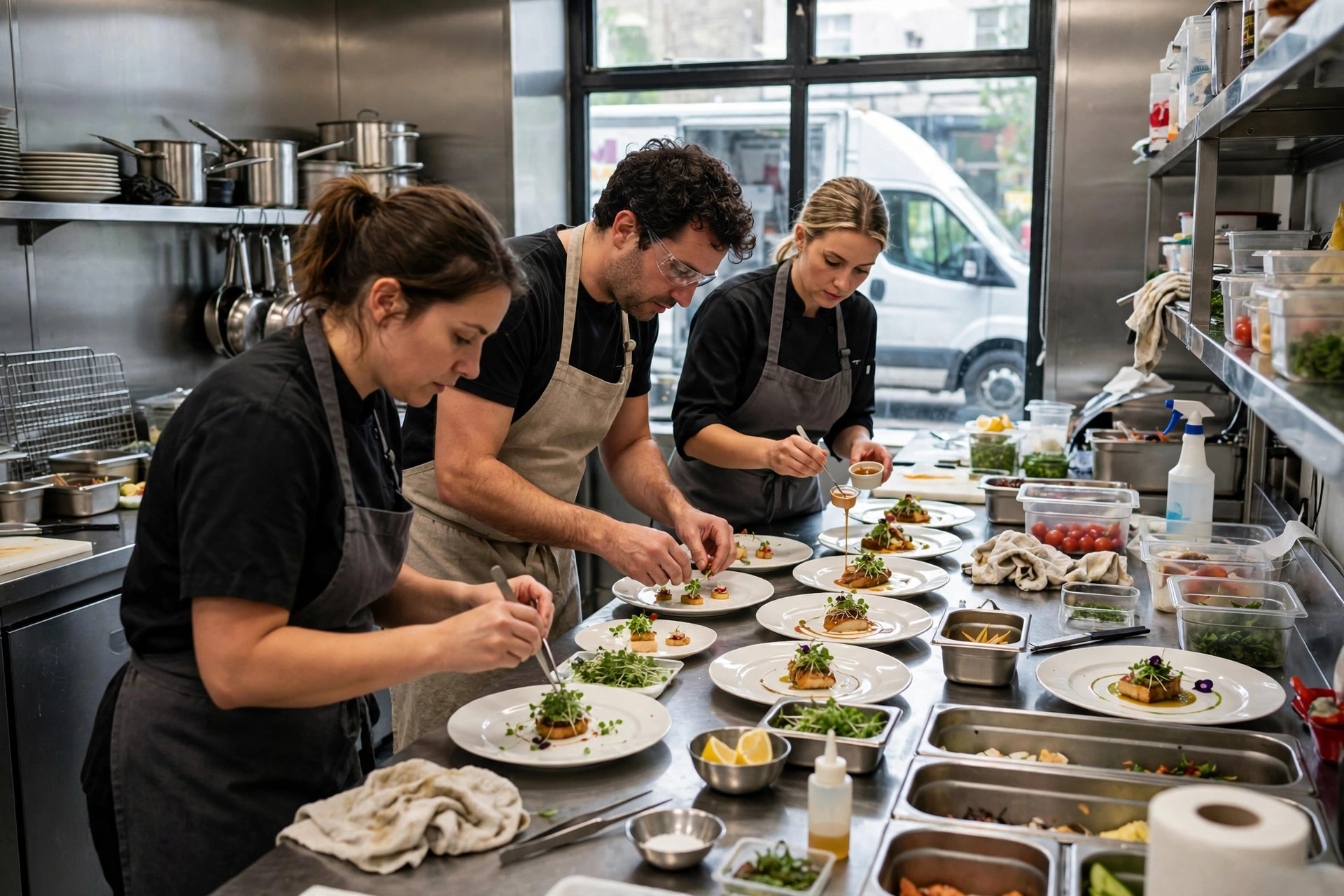
Catering looks like cooking from the outside — a menu, a van, a room full of guests. The business underneath is a cash-flow puzzle: food and labor are bought weeks before the event, deposits arrive in pieces, corporate clients pay on net-30 or net-60 terms, and the calendar swings from a packed wedding season to a quiet January. This guide covers what catering companies actually borrow for, what opening, growing, or equipping one costs in 2026, and which product fits each need.
The funding map for a caterer starts with one distinction: are you borrowing for something that lasts, or for a gap between spending and getting paid? Equipment lasts. The gap does not. Match the product to the answer and the loan stops fighting the business.
What catering companies actually borrow for
Most catering borrowing falls into five buckets. Kitchen and equipment: commercial ovens, ranges, refrigeration, prep tables, and smallwares for a dedicated kitchen, or the first owned setup after outgrowing a rented commissary. Transport: a delivery van or refrigerated truck, hot boxes, and the racks and Cambros that keep food safe in transit. The bookings float: payroll and ingredients for events already sold but not yet paid, especially corporate accounts that settle weeks after the event. Growth: a second van, a second crew, a bar program, or a tasting room that turns tastings into bookings. And the slow season: January and February payroll and rent while the calendar rebuilds toward spring weddings and holiday parties.
What opening or growing a catering company costs in 2026
Startup costs scale with the model, not with ambition. A small home-based or commissary-based operation typically runs $10,000 to $30,000 to launch: basic kitchen gear, licensing, insurance, and a first marketing push. A medium operation — a rented kitchen, a delivery van, a small crew — typically needs $30,000 to $100,000, with commercial kitchen equipment alone at $20,000 to $50,000, a delivery vehicle at $15,000 to $30,000, and staffing and payroll setup at $15,000 to $40,000. A large full-service operation with its own kitchen, fleet, and bar program runs $100,000 to $250,000 or more before the first event. The single most common budgeting error is funding the kitchen and forgetting the float: ingredients, labor, and transport for the first 6 to 12 months of events, which medium operations typically budget at $20,000 to $50,000.
The deposits-and-bookings float is the real underwriting story
Caterers do not get paid like restaurants. A wedding books months out with a deposit, a final payment lands days before the event, and a corporate account may pay 30 to 60 days after it. That means a caterer can be fully booked and still broke on a Tuesday: payroll for Saturday's crew is due before Saturday's final payment clears, and the corporate event from three weeks ago is still an invoice. Funders who understand catering underwrite the pipeline, not just the deposits — signed contracts, deposits collected, and the booked calendar matter as much as the last three statements. A caterer with a full month of booked work and deposits in hand typically qualifies for more than one with the same deposits but an empty schedule.
Which product fits which need
Equipment financing fits the van, the oven, and the refrigeration — the asset secures the loan, which usually means easier underwriting and a term matched to the asset's life. A working capital loan or advance fits the float: payroll, ingredients, and transport for events already sold. A business line of credit fits the recurring gap between events and corporate payment, drawn when needed and repaid as invoices clear. SBA microloans, up to $50,000, fit startups that lack revenue history but have a plan and some owner investment; larger SBA 7(a) loans fit a kitchen build-out or a property purchase but take one to three months. Term loans fit a planned, one-time expansion — a second location or a commissary build-out — on a fixed schedule. Borrowing a daily-debit advance to cover a 60-day corporate receivable is the classic mismatch: the debit arrives daily while the payment arrives monthly.
What funders weigh on a catering file
Deposits over the last 3 to 6 months come first, then the shape of those deposits: a caterer whose revenue clusters around weekends and wedding season is normal, but a funder wants to see the slow months covered, not hidden. Next comes the pipeline — signed contracts and deposits collected tell a funder the next quarter is real. Then the kitchen question: a licensed commissary or owned kitchen with a health-department record reads as lower risk than an unpermitted home setup, and a lease with term left on it reads better than a month-to-month arrangement. Credit matters, but for revenue-based products it sits behind deposits, pipeline, and time in business. Health permits, food-handler certifications, and liquor liability coverage for bar service all help a file because they remove the funder's downside questions before they are asked.
Documents: what you actually need
Your last 3 months of business bank statements are the core document — funders underwrite from deposits, so statements are required. Add your booked-events pipeline and deposit ledger if you have them; for caterers, that pipeline is often the difference between an average offer and a strong one. A photo ID and a voided check are optional, not required, and no funder should demand them before showing you offers. New caterers without statements should bring a business plan, a commissary agreement, and any signed contracts or deposits — equipment financing can often be approved on the asset and the plan alone.
Mistakes that cost caterers real money
First, underpricing to fill the calendar: a full schedule at a loss burns labor and food cost faster than an empty one, and funders read thin margins in the statements. Second, no deposit policy — catering without a meaningful deposit means financing the client's event yourself. Third, renting a commissary forever without doing the ownership math: at a certain volume, the monthly rental exceeds the payment on an owned setup, and the owned setup is collateral. Fourth, borrowing short money for a long asset, or daily-debit money for a 60-day receivable. Fifth, skipping the slow-season reserve: January arrives every year, and the caterer who plans for it borrows on their own terms.
Opening, equipping, or growing a catering company? See what you qualify for
From the first commissary shift to the second crew — get a no-obligation quote from our #1-ranked lender, Coast to Coast Fast Funding. One application reaches multiple funders, so you see the actual market for your file.
Apply Now →Soft credit check · 60-second pre-qualification