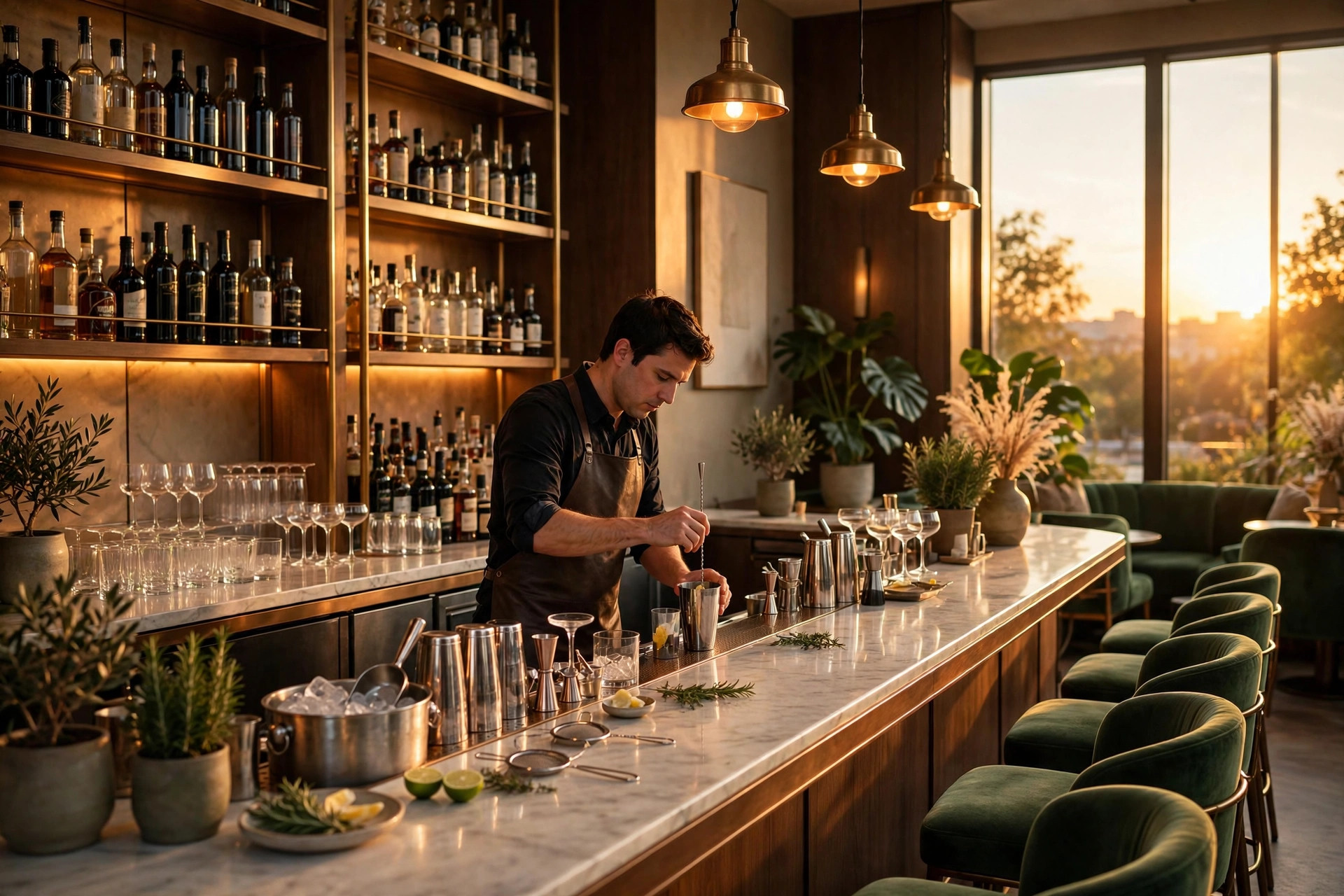
A bar is a cash machine on Friday and Saturday night — and a slow bleed the other five days. The economics are brutally simple: two nights pay for the whole week, the post-holiday stretch is a desert, and the buildout money leaves the account months before the first pour lands in it. Underwriters know this, and they price the volatility.
Which is why bar owners need a funding map built for how bars actually run, not how lenders wish they ran. This guide covers where bar money really goes, what funders actually weigh on a bar file, which product fits each need, and the red flags that separate a good capital plan from an expensive one. Bars share DNA with restaurants — if you run a kitchen too, our restaurant funding guide is the companion read.
Where the money actually goes in a bar or nightclub
Buildout and renovation. The bar itself, the back bar, flooring, bathrooms, the patio. Leasehold improvements are money you cannot take with you — budget them as a fixed project with a fixed product, because they never generate a dollar until opening night.
Liquor inventory. Well to top-shelf is a ladder of cash sitting on shelves. Overbuy the top shelf and you own dead stock gathering dust; underbuy and Friday night runs dry at midnight. Inventory is a working-capital problem with a very specific name.
Sound, lighting, and AV. In a nightclub, the DJ booth and the light rig are revenue equipment — they are why the door line forms. Treat them like machinery: named assets with quotes, useful lives, and a product matched to them.
Staffing and training. Bartenders, barbacks, security, the slow-week payroll that keeps the team intact for the busy one. Labor is a bar's biggest weekly outlay, and it does not flex with Tuesday's empty room.
The slow-season float. Post-holiday January through March is the industry's desert; college-town bars lose the summer; patio bars lose the winter. The float that carries payroll and rent through it is legitimate working capital — and funding the off-season is one of the most normal things a seasonal business does.
The qualification reality
Marketing says "bars welcome." Underwriting says: prove the weekends. Here is what actually moves a bar file:
Card revenue mix. A bar running heavy card volume has the cleanest fundable deposits in small business — every swipe is documented revenue. Cash-heavy rooms need immaculate books, because undeclared cash is invisible to an underwriter.
Seasonality, stated honestly. Show the slow season in the statements and explain it — underwriters price surprises, not patterns. A January dip you warned about is a plan; one you hid is a risk. Know what they look for, then tell the real story.
Lease terms. Years remaining, renewal options, assignment language. Funders ask about the lease because the location is half the collateral — a bar with 18 months left and no renewal option is a different file than one with eight years.
Time in business. One full seasonal cycle is the real line. A bar that has survived a January has proven something no six-month-old room can claim.
The liquor license. Clean, current, in the operating entity's name. A license problem pauses everything else — sort it before you apply for anything.
The operator. Experienced operators get more benefit of the doubt than first-timers. Say who runs the floor and what they have run before.
Which product fits which need
| Need | Product that fits | Why |
|---|---|---|
| Sound, lighting, kitchen gear | Equipment financing | Named assets with quotes — payments matched to the gear's useful life. |
| Liquor inventory & slow-season float | Business line of credit | Draw for the holiday order, repay through December, draw again for January. Best shape for a bar's rhythm. |
| Payroll Friday, big weekend ahead | Merchant cash advance | Card-heavy bars are its natural home — repayment flexes with the batch. Sprint only. |
| Full renovation, fixed budget | Term loan | A fixed project gets a fixed product. Know the number, fund the number, open on time. |
| Buying the building | SBA 7(a) | The long, patient money for owner-occupied property — not fast, and it wants history. |
Equipment financing — for the buildout gear. The DJ booth, the light rig, the walk-in cooler, the kitchen line: when you can name the asset and show the quote, equipment financing beats a general-purpose product on almost every axis. Payments are matched to the gear's useful life, and it leaves your general funding capacity free for inventory and the slow season.
Business line of credit — for inventory and the float. Draw for the holiday liquor order, repay through the busy weeks, draw again for the January float — pay for what you use, when you use it. For a bar's rhythm, nothing matches it. The catch: lines are harder to qualify for than advances, so they reward the established room with clean statements. See the honest MCA vs line of credit comparison before you choose.
Merchant cash advance — on card volume, for speed. Card-heavy bars are this product's natural home: repayment flexes with the card batch, and the money is fast. The discipline is everything — one obligation, for a genuine sprint (payroll Friday, the big weekend ahead), never stacked, never against thin weeknight margins. Compare it against a term loan when the need is planned rather than urgent.
SBA 7(a) — for buying the building. If you own (or are buying) the property the bar sits in, SBA is the long, patient money for it — up to $5 million for owner-occupied real estate, terms measured in decades. It is not fast, and it wants a couple of years of history and strong credit.
Term loan — for the full renovation. A fixed project with a fixed budget and a fixed opening date gets a fixed product. Do the buildout math once, fund it once, and open on time.
Bars & nightlife red flags
Daily debits on thin margins. A weeknight-slow bar paying daily is a spiral: the slow nights do not cover the debit, so the busy nights service debt instead of building the float. If the room's margins are thin, daily repayment is the wrong shape — full stop.
Financing hoped-for crowds. Fund on proven Friday/Saturday revenue, not the Tuesday-night residency you have not booked yet. Hype is not a revenue stream, and no funder prices it like one.
"Guaranteed approval" ads. No legitimate funder guarantees approval — the phrase is a lead-generation hook, and the product behind it is usually the most expensive one on the menu. Real qualification takes statements and underwriting, even for bars doing seven figures.
Borrowing to cover rent in a bad location. Funding does not fix foot traffic. If the room cannot draw a crowd at the current rent, capital buys time, not a turnaround.
Signing the lease and the guarantee without reading the assignment clauses. If the landlord can block an assignment, your exit options shrink — and your funder's view of the file shrinks with them.
Getting ready to apply: the checklist
Funding-ready checklist
- Last three months of bank statements from the company's operating account — submit them right, the standard ask
- Lease copy: years remaining, renewal options, and assignment language
- Liquor license clean, current, and in the operating entity's name
- A full seasonal calendar showing the slow months honestly — funders price surprises, not patterns
- Card-processing statements if revenue is card-heavy — they strengthen the file
- Equipment quotes for sound, lighting, or kitchen gear being financed
- Photo ID and a voided check available if a specific product's verification asks — not required upfront
Frequently asked questions
Can bars get business loans?
Yes. Bars with real card revenue and a track record fund well — heavy card volume produces the cleanest, most documentable deposits in small business. Fast products like merchant cash advances are natural fits for card-heavy bars; term loans and lines of credit want more history; SBA 7(a) works for owner-occupied property. The main gates are time in business, lease terms, and a clean liquor license.
How long does a bar need to be open to qualify for funding?
One full seasonal cycle is the real line. A bar that has survived a slow season — January through March in most markets — has proven something no six-month-old room can claim. Fast revenue-based products may fund younger bars on card volume alone; term loans and lines of credit typically want a year or more; SBA products want a couple of years.
Is a merchant cash advance a good fit for a bar?
It can be — card-heavy bars are the natural home of this product, because repayment flexes with the card batch. The discipline is everything: one obligation, used for a genuine sprint like payroll before a big weekend, never stacked, and never against thin weeknight margins. Daily debits on a slow-week bar become a spiral fast.
Can I finance bar equipment and sound systems separately?
Yes — and you should. Sound systems, lighting rigs, kitchen equipment, and walk-in coolers are named assets with quotes and useful lives, which makes them equipment financing's home turf. It keeps payments matched to the gear's life and leaves your general funding capacity free for inventory and the slow season.
What do lenders look at for nightclub financing?
Card revenue mix and proven weekend volume first, then the seasonal pattern (stated honestly), lease terms with years remaining and renewal options, the liquor license in the operating entity's name, time in business through at least one slow season, and the operator's experience. Bank statements are the standard evidence for all of it.
Do I need a voided check or photo ID to apply?
No. Applications run on bank statements — the last three months of the company's operating account are the standard ask. A voided check or photo ID is sometimes requested for verification on specific products, but neither is a universal requirement, and anyone demanding them upfront before showing you terms is a red flag.
Renovation, inventory, or the slow season ahead? See what you qualify for
From the buildout to the January float — get a no-obligation quote from our #1-ranked lender, Coast to Coast Fast Funding. One application reaches multiple funders, so you see the actual market for your file.
Apply Now →Soft credit check · 60-second pre-qualification