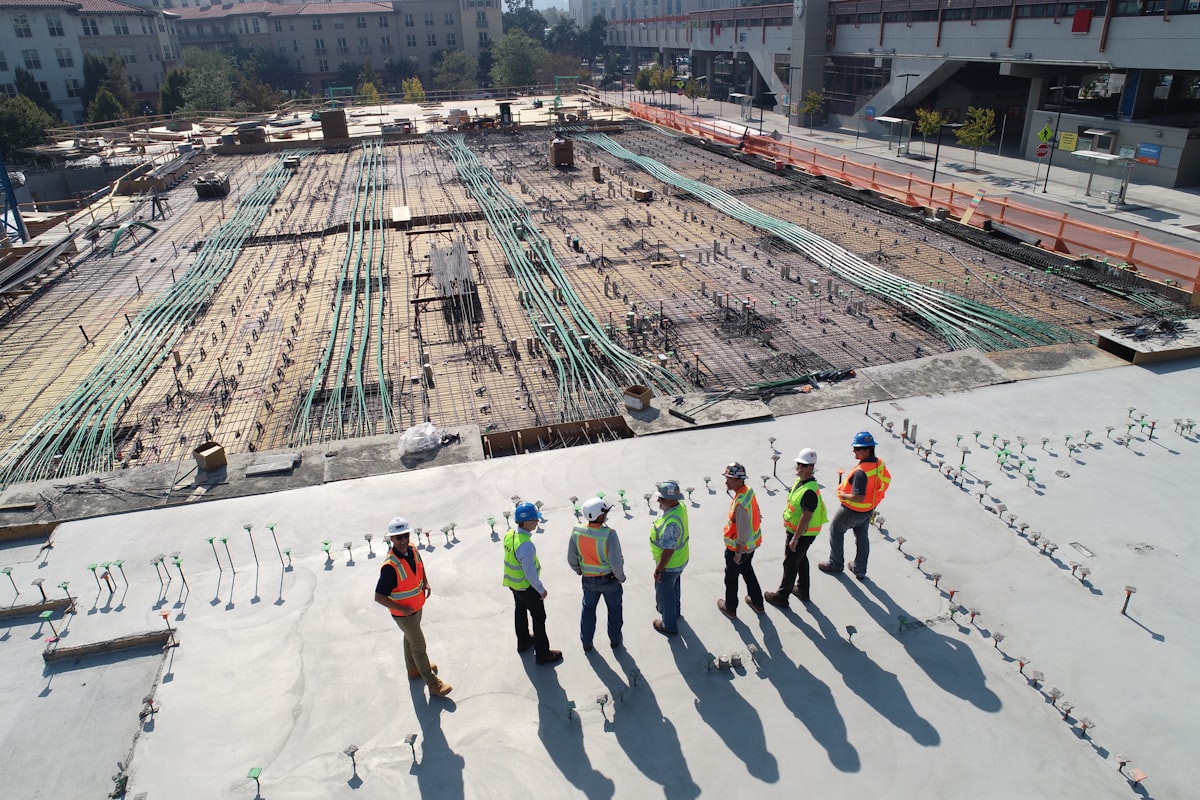
Construction is the original cash-flow squeezed industry. You buy materials and pay labor weekly, but your client pays you on a draw schedule that's 30 to 60 days out — and that's if the architect signs off on the pay app on time. A general contractor running $1.5M annual revenue can easily be $200K+ underwater on working capital at any given moment, and that's during a normal year. When you take on a bigger job, the gap widens before it narrows.
Why construction businesses get squeezed on cash flow
- Material costs are upfront. Lumber, steel, concrete, sub vendor deposits — all paid before the work generates the receivable.
- Labor is weekly. Crews don't wait for the client to pay before cashing checks.
- Draws are slow. Even on a well-run job, the pay app → architect approval → owner approval → check cycle is 30-45 days. Disputed change orders stretch it further.
- Retention sits. 5-10% retainage on the entire contract is held until substantial completion — often 90+ days out.
- Seasonality is real. Northern climates have a genuinely slow Q1 even on a busy book.
- Equipment breakdowns are expensive. A skid steer, excavator, or truck down for two days can cascade through a whole schedule.
What construction businesses actually qualify for
Most fast funders treat construction as a standard vertical with some additional documentation requirements. Approval is revenue-driven:
| Annual revenue | Typical funding range |
|---|---|
| $300K – $750K | $25K – $150K |
| $750K – $2M | $100K – $500K |
| $2M – $5M | $300K – $1.5M |
| $5M+ | $500K – $5M+ |
You may be asked for additional items beyond standard documents: most recent profit-and-loss, work-in-progress schedule, and AIA pay applications for larger funding requests.
Which lenders work well with construction
Coast to Coast Fast Funding
Active in construction across trades — GCs, electricians, plumbers, HVAC, roofers, concrete, framing, drywall, finish carpenters. $5K – $5M range covers everything from a small owner-operator needing $15K for a material deposit to a mid-size GC needing $1M for a project gap. Full review.
Fora Financial
Strong choice for larger advances up to $1.5M. Common fit for established GCs.
Rapid Finance
Most flexible time-in-business requirement (3 months) — useful for newer LLCs spun off from established owner operators.
National Funding
Equipment financing combined with working capital is a real strength for construction — funding a new excavator alongside the cash to keep payroll moving.

How construction businesses use fast funding well
Material deposits for a new contract
You signed a contract, you have the deposit from the client, but materials require 50% down and the lead time is six weeks. A short-term advance bridges the gap, gets you on the calendar, and is paid back from the first draw.
Equipment breakdowns or replacements
A truck blew its transmission on a job site. The repair is $9K and you can't dispatch crews without it. Fast funding covers it the same day.
Payroll gap during slow draws
The architect didn't sign off on this month's pay app on time. Your guys still need paychecks Friday. A short-term advance covers it without you having to call your bank or your CPA.
Pursuing a larger job that requires bonding
Surety bonding requires liquid working capital on your balance sheet. Sometimes a structured short-term advance can shore up your balance sheet specifically to qualify for bonding on a larger contract.
When NOT to fund construction work with an MCA
Two failure modes to avoid:
- Funding a job that's losing money. If the contract pricing was wrong and you're underwater on margin, an MCA just buys you time before a larger loss. Address the contract or change-order situation first.
- Funding speculative spec work. An MCA on a spec house that takes 9 months to sell is a recipe for a tight finish — the daily ACH withdrawals start immediately, but your liquidity event is far away. Use construction loans (true mortgages), not MCAs, for spec.
Frequently asked questions
Can I get funding if I'm a 1099 sub or owner-operator?
Yes — owner-operators and small subs fund regularly. The application looks similar; the lender wants 3 months of business bank statements (not personal). If you bill through an LLC with its own bank account, you're in good shape.
Do construction lenders look at my bonding capacity?
Working-capital advances generally do not — they're underwritten on bank statements, not balance sheets or work-in-progress. For larger structured deals over $500K, expect more balance-sheet scrutiny.
What about union vs. non-union construction?
Doesn't affect underwriting. Lenders care about revenue consistency and bank-statement quality, not your labor agreements.
See what you qualify for
Get a no-obligation quote from our #1-ranked lender, Coast to Coast Fast Funding — $5K to $5M, funded in under 24 hours, 500 minimum credit.
Start your free quote →Soft credit check · 60-second pre-qualification